

Key Takeaways
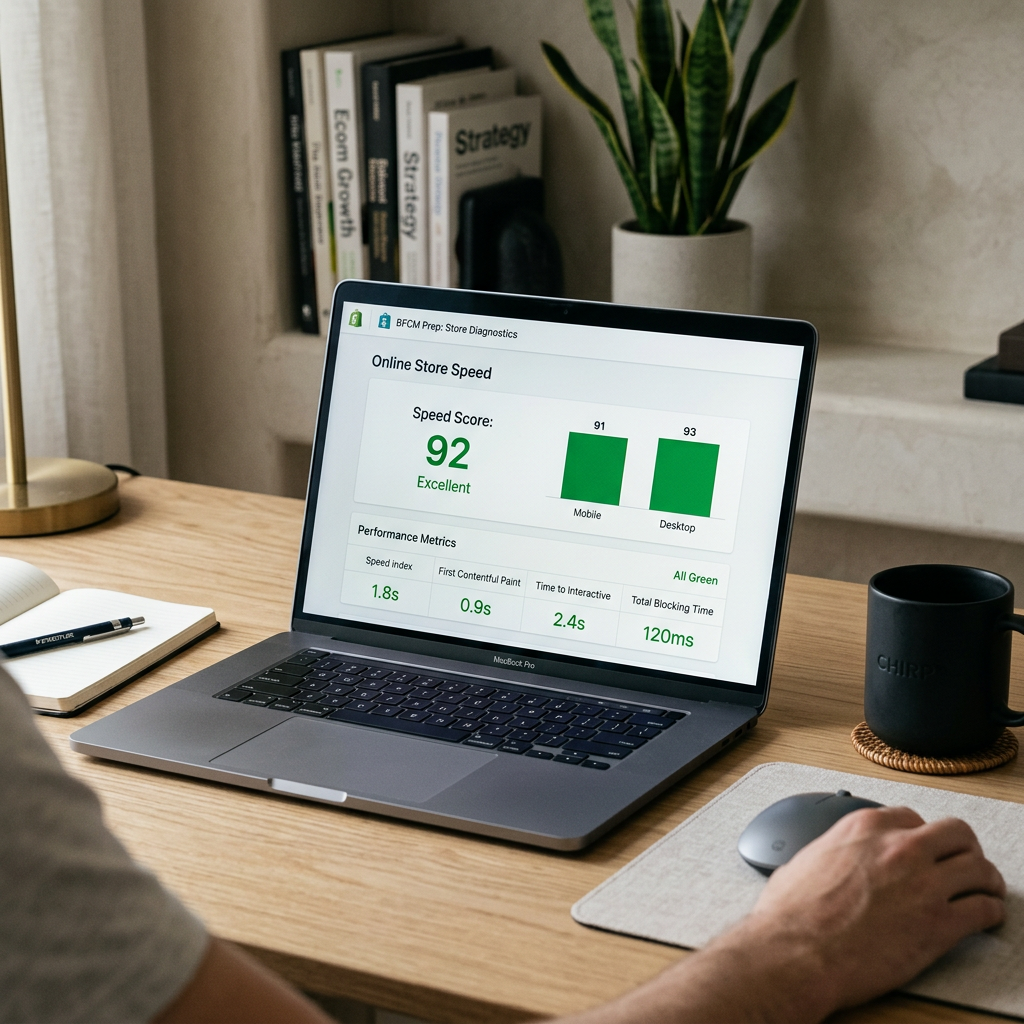
- Mobile-First Performance Thresholds: Ensure your Shopify store achieves a Largest Contentful Paint (LCP) under 2.5 seconds on 4G connections to prevent a 20% drop in conversion rates during peak traffic.
- Early SEO Indexing: Finalize Black Friday landing pages and submit them via Shopify’s URL redirect tool at least 45 days prior to the event to secure organic ranking for competitive seasonal keywords.
- Inventory Cushioning: Maintain a 15% buffer on top-tier stock to account for real-time inventory latency during high-velocity checkout surges, specifically for stores utilizing Shopify Markets.
- Discount Stacking Logic: Transition from broad percentage discounts to tiered 'Buy More, Save More' logic using Shopify Scripts or Functions to increase Average Order Value (AOV) by a projected 12-18%.
The commerce landscape of 2026 demands more than just a discount code and a banner change. Success during the Black Friday Cyber Monday (BFCM) window requires a meticulous blend of technical infrastructure, psychological pricing, and disciplined logistics. This guide outlines the exact roadmap for Shopify merchants to stabilize their operations and scale their revenue this November.
The Technical Foundation for Shopify Black Friday
Site reliability is the non-negotiable floor of seasonal commerce. While Shopify’s core infrastructure is robust, the third-party apps and heavy assets you layer onto your theme can create critical points of failure under load. Merchants must audit their Liquid code and app dependencies by late September to ensure the storefront remains lightweight.
Technical Specs for Site Optimization
| Attribute | Recommendation | Rationale |
|---|---|---|
| Hero Image Size | < 200 KB (WebP format) | Minimizes LCP and reduces bounce rates on mobile. |
| Alt Text Length | 80–120 characters | Balances accessibility with keyword density for image search. |
| Font Loading | font-display: swap; |
Prevents invisible text during the initial load cycle. |
| App Audit | Remove > 3 unused apps | Reduces excessive JavaScript execution time. |
| Meta Title | 55–60 characters | Ensures full visibility in 2026 Google search results. |
Optimizing Images and Assets
Visual storytelling drives conversion, but unoptimized media destroys page speed. For 2026, the standard is utilizing WebP or AVIF formats for all product photography. Use the Free Shopify Alt Text Generator to ensure every seasonal asset contributes to your SEO visibility while remaining accessible to screen readers.
Refining Product Discoverability
High traffic is useless if users cannot find what they need in two clicks. Audit your navigation menus and implement smart search filters through Shopify’s Search & Discovery app. If your current product summaries feel dated or lack a conversion-focused edge, the Free Shopify Product Description Generator can help rewrite key listings to highlight seasonal benefits rather than just features.
Strategic SEO and Content Mapping
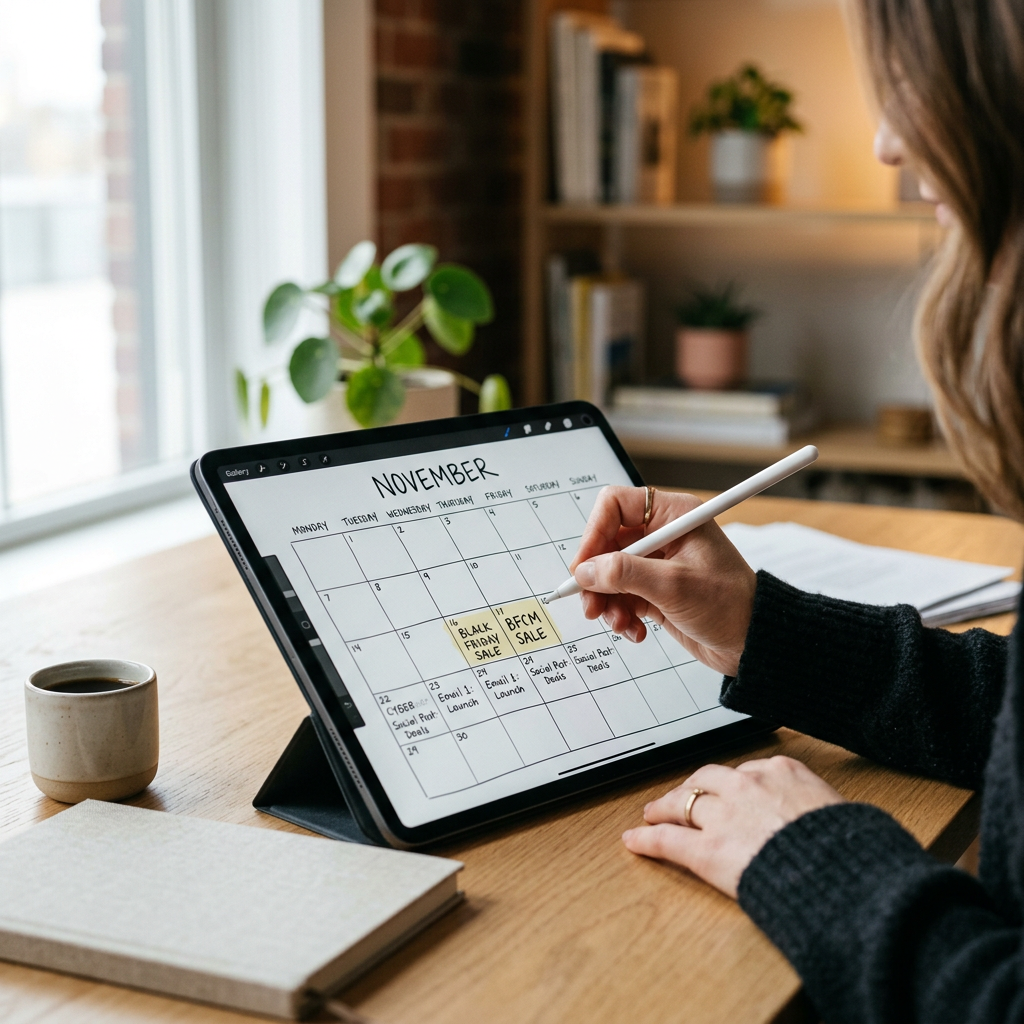
Organic search remains the highest-margin channel for Shopify merchants. Waiting until November to publish your BFCM pages is a tactical error; Google’s indexing bots require lead time to crawl and categorize seasonal content. Your strategy should center on a dedicated "Black Friday Deals" landing page that exists year-round but is updated with fresh offers annually.
Building Topical Authority
To compete with retail giants, niche brands must demonstrate deep authority. This involves creating a cluster of content—gift guides, comparison articles, and 'best of' lists—that link back to your main sales page. You can map out this architecture using the Free Shopify Blog Topic Generator to ensure your internal linking structure supports your most important keywords.
On-Page SEO Checklist for 2026
Every sale page needs a unique meta title and description that includes the year 2026 to signal relevance to users. Avoid generic titles like "Sale Page." Instead, use specific, benefit-driven language. For a quick health check on your existing pages, run your URL through the Free Shopify Store SEO Checker to identify broken links or missing header tags that could hinder your performance.
Pro-Tip: Implement Schema.org markup for 'Product' and 'Offer' on your BFCM landing page. This allows Google to display your discounted prices and stock status directly in the search results, increasing your click-through rate before the user even reaches your site.
Pricing Psychology and Profit Protection
Aggressive discounting can erode margins if not calculated with precision. In 2026, sophisticated merchants are moving away from flat 20% off site-wide sales. Instead, they utilize tiered incentives that protect the bottom line while rewarding high-value customers. Understanding your net margins after all platform costs is essential for sustainable growth.
Calculating Realized Profit
Before finalizing your discount tiers, account for the hidden costs of scaling: increased shipping rates, transaction fees, and ad spend volatility. Use the Free Shopify Fee Calculator to model different sale scenarios. This ensures that a 40% discount on a specific collection doesn't result in a net loss once Shopify Payments and third-party app fees are subtracted.

The Shift to AOV-Driven Offers
Instead of a single discount code, consider these three structures for 2026:
- Threshold Discounts: "Spend $150, Save $30"—this pushes shoppers to add one more item to their cart.
- Product Bundles: Grouping complementary items into a single SKU to simplify the decision-making process.
- Gift with Purchase: Offering a high-perceived-value, low-cost item for orders over a specific amount to preserve the price integrity of your main products.
Operational Readiness and Logistics
The most elegant marketing campaign will fail if the logistics chain breaks. Shopify Black Friday peak volumes often reveal weaknesses in fulfillment and inventory syncing. Ensure your warehouse or 3PL is briefed on projected volumes by mid-October.
Managing Inventory Latency
During high-velocity sales, there is often a slight delay between a customer placing an order and the inventory count updating across all sales channels. To prevent overselling, set your inventory levels in Shopify to slightly less than your actual physical stock. This "safety stock" acts as a buffer against technical sync delays.

Post-Purchase Excellence
BFCM is an acquisition play, but the real value lies in retention. Your transactional emails (order confirmation, shipping updates) should be styled to match your brand identity. Use these touchpoints to set expectations for delivery times, which may be longer than usual during the holiday rush. Providing clear, proactive communication reduces the burden on your customer support team and builds trust for repeat purchases in 2027.
For a deeper dive into long-term search strategy, refer to our comprehensive guide on Shopify SEO: The Complete Guide for Store Owners (2026).
Conclusion
Winning Shopify Black Friday in 2026 requires a balanced focus on technical speed, search visibility, and margin protection. By preparing your store's infrastructure early and utilizing data-driven pricing models, you position your brand to thrive in a competitive marketplace. Focus on the details today to ensure a seamless experience for your customers in November.
Audit your store’s search readiness today with the Free Shopify Store SEO Checker.
FAQ
Q: When should I start my Black Friday sale on Shopify? A: In 2026, the trend is moving toward 'Early Access' starting the Monday before Thanksgiving. This allows you to capture early spenders and test your site stability before the Friday peak.
Q: How do I handle site speed during high traffic? A: Minimize the use of heavy tracking pixels and large video files on the homepage. Shopify’s servers will handle the traffic, but the client-side rendering speed depends on your theme’s efficiency.
Q: Should I use a dedicated landing page for BFCM?
A: Yes. A dedicated URL like /pages/black-friday allows you to build SEO equity year-over-year rather than starting from scratch with a new page every season.
Q: How can I prevent discount code abuse? A: Use Shopify’s native 'Discounts' settings to limit codes to one use per customer and set specific requirements, such as a minimum purchase amount or specific collections.