

Key Takeaways
- Optimize for One-Click Checkout: Implementing Shop Pay and digital wallets can reduce mobile checkout time by up to 40%, directly impacting the 70% average abandonment rate.
- Eliminate Hidden Costs: Unexpected shipping fees and taxes account for 48% of abandoned carts; displaying total costs, including duties for international orders, early in the session is critical.
- Technical Performance Benchmarks: Ensure your checkout loads in under 1.8 seconds, as every 100ms delay in the mid-funnel transition correlates to a 1% drop in conversion.
- Recovery Timing: Sending the first automated recovery email within 30 to 60 minutes of abandonment yields the highest open and conversion rates in 2026.
A cart left behind is not a permanent loss, but a signal of friction. In the current Shopify ecosystem, the bridge between 'Add to Cart' and 'Order Confirmed' is built on transparency and technical precision.
The Anatomy of the Checkout Friction
In 2026, the modern merchant must view the checkout as a fragile sequence of micro-decisions. If a customer encounters a forced account creation or an ambiguous shipping policy, they prioritize their time over your product. The standard Shopify checkout flow is optimized by default, but minor customizations can inadvertently introduce hurdles.
Modern Technical Benchmarks
To compete in a crowded marketplace, your store must adhere to strict performance standards. Optimization starts with your theme's Liquid liquid files and extends to how you handle third-party scripts. High-growth merchants prioritize the Shopify Store SEO Checker to identify scripts that might be bloating the cart page and slowing down the transition to the secure checkout domain.
Technical Specs: Performance and Constraints
| Feature | Recommended Specification / Threshold |
|---|---|
| Cart Page Load Time | < 1.5 seconds |
| Checkout Step Transition | < 500ms |
| Mobile Button Size | Minimum 44x44 pixels |
| Product Image Alt Text | Under 125 characters |
| Discount Code Application | Instant (no page reload) |
| Shop Pay Integration | Enabled (reduces steps from 5 to 1) |
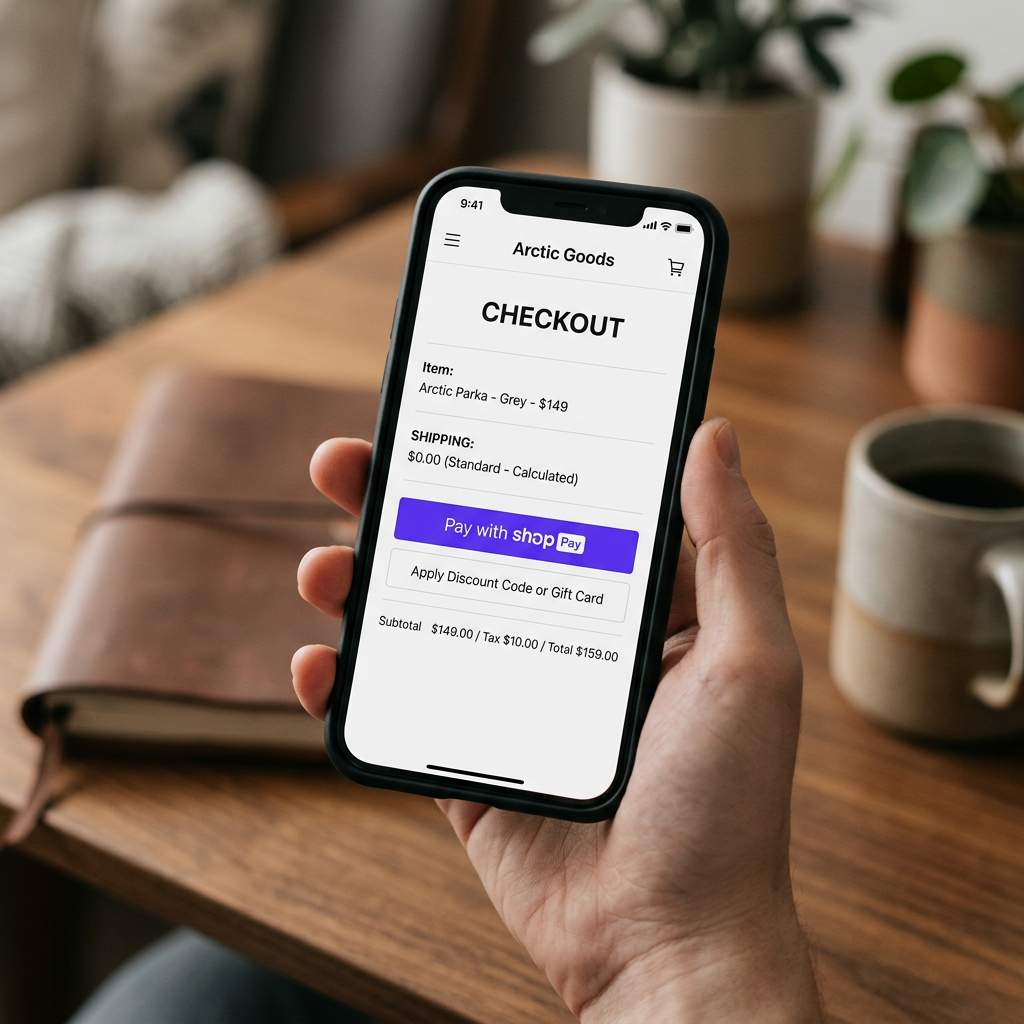
Transparency in Pricing and Fees
Sticker shock remains the primary driver of Shopify cart abandonment. When a customer reaches the final payment screen and sees a 15% increase due to shipping and handling, the perceived value of the item drops instantly. Use Shopify’s native estimated shipping calculators on the product page or cart drawer to provide early clarity.
Calculating Real Margins
Before offering widespread free shipping to combat abandonment, you must understand your net profitability per order. Many merchants overlook the cumulative impact of Shopify Payments fees and app subscriptions on their bottom line. Utilizing a Shopify Fee Calculator allows you to determine if you can afford to bake shipping costs into the product price, which significantly lowers abandonment rates.
International Shipping and Taxes
For stores selling globally in 2026, using Shopify Markets is essential. It ensures that duties and import taxes are calculated at checkout, preventing the customer from fearing additional COD (Cash on Delivery) charges from the carrier. This level of transparency builds the trust necessary to convert a high-intent international browser into a buyer.
Pro-Tip: Move your 'Free Shipping' threshold notification to the top of the cart drawer. Seeing a progress bar like 'Add $12 more for free shipping' gamifies the experience and removes the friction of calculating costs themselves.
Optimizing the Mobile Experience
With over 80% of Shopify traffic originating from mobile devices in 2026, the 'thumb-friendliness' of your cart is your most important asset. Any field that is difficult to tap or a form that requires extensive typing is a point of exit. Transitioning customers from the cart to a branded checkout should be seamless.
The Power of Accelerated Checkouts
Accelerated platforms like Apple Pay, Google Pay, and Shop Pay bypass the traditional 3-step checkout. By pulling the customer’s saved shipping and billing data instantly, you remove the physical requirement of typing on a small screen. This is particularly effective for impulse purchases driven by social commerce.

Visual Clarity and Trust Signals
Ensure that every product in the cart has a clear, high-quality thumbnail. If images are slow to load, users may feel the site is insecure. Use the Shopify Alt Text Generator to ensure your images are indexed and accessible, which indirectly supports the psychological feeling of a professional, well-maintained storefront.
Advanced Recovery Strategies
Not every abandoned cart can be prevented at the source. A multi-channel recovery strategy—combining email, SMS, and retargeting—is the standard for 2026. The key is to offer value or assistance rather than just a nudge.
Automated Email Sequences
Your first recovery email should be a service-oriented 'Did something go wrong?' message. Subsequent emails can introduce limited-time offers or highlight social proof. Use the Shopify Product Description Generator to find fresh ways to describe the benefits of the items left in the cart, reminding the user why they wanted the product in the first place.
Retargeting with Precision
Ensure your Meta and Google pixels are firing correctly on the 'Initiate Checkout' event. Using Shopify's Audiences feature allows you to retarget these high-intent users with dynamic creative that shows the exact products they abandoned.
| Recovery Channel | Best Use Case | Expected Recovery Rate |
|---|---|---|
| Email #1 (1hr) | Customer Service / Gentle Reminder | 3% - 5% |
| SMS (2hrs) | Urgent, Time-Sensitive Discounts | 8% - 12% |
| Retargeting Ads | Visual Re-engagement | Variable (High ROI) |
| Email #2 (24hrs) | Scarcity / Social Proof | 1% - 2% |
Refining the Content Funnel
Sometimes, abandonment isn't about the checkout at all—it's about a lack of information earlier in the journey. If customers are adding items to their cart just to see the total price or check your return policy, your product pages are failing.
Create a comprehensive FAQ or a blog series addressing common purchasing hesitations. If you are struggling with ideas, a Shopify Blog Topic Generator can help you identify content clusters like 'How to choose the right size' or 'Our ethical sourcing guide,' which build the confidence needed to complete a purchase without hesitation.
Managing Shopify cart abandonment is an iterative process of removing psychological and technical barriers. By focusing on speed, price transparency, and mobile optimization, you transform your cart from a point of friction into a smooth gateway for your customers.
Ensure your store's technical foundation is solid by running a diagnostic through ListerRank's free optimization tools.
Frequently Asked Questions
What is a healthy cart abandonment rate for Shopify in 2026?
While it varies by industry, an average rate horizontal across Shopify is approximately 70%. Top-tier stores aiming for excellence should target a rate below 60% through optimized mobile checkouts and transparent shipping.
Does Shop Pay actually reduce abandonment?
Yes. Internal Shopify data and 2026 merchant case studies show that Shop Pay can increase checkout-to-order conversion by up to 50% compared to guest checkout by removing manual data entry.
How many recovery emails should I send?
A three-part sequence is standard: a reminder at 1 hour, a social proof/benefit reminder at 24 hours, and a final discount offer at 48-72 hours. Avoid sending more than three to prevent list fatigue.
Should I always offer a discount in my cart recovery emails?
Not necessarily. Leading with a discount can train customers to abandon carts on purpose. Try providing helpful information or highlighting your return policy first before offering a financial incentive.