

Key Takeaways
- Prioritize Site Speed: Ensure Largest Contentful Paint (LCP) is under 2.5 seconds to align with 2026 Core Web Vitals standards and reduce bounce rates.
- Optimize Product Assets: Image files must be under 200KB and include unique, descriptive alt text under 125 characters for both accessibility and image search ranking.
- Structure Data for Rich Snippets: Implement Product and Review schema via JSON-LD to increase click-through rates (CTR) by an average of 15-30% in organic search.
- Eliminate Duplicate Content: Use canonical tags and manage URL parameters in Shopify to prevent indexing of filter-based collection pages that dilute authority.
The difference between a store that merely exists and one that grows lies in the precision of its technical foundation. As competition in the Shopify ecosystem intensifies in 2026, organic visibility is no longer a byproduct of luck, but a result of deliberate, high-impact configurations. This checklist isolates the specific adjustments that move the needle for modern merchants.
Technical Foundations and Site Speed
The Mobile-First Performance Standard
In 2026, mobile search accounts for over 70% of e-commerce traffic. Your Shopify theme must not only be responsive but exceptionally light. Shopify's Online Store 2.0 architecture has significantly improved base speeds, but third-party app scripts often introduce bloat. Periodically audit your /admin/themes to remove code remnants from uninstalled apps that still call external servers.
Technical Specs for Performance
| Element | Target Metric / Limit | Impact Level |
|---|---|---|
| Largest Contentful Paint (LCP) | < 2.5 Seconds | Critical |
| Cumulative Layout Shift (CLS) | < 0.1 | High |
| Product Image File Size | < 200 KB | High |
| Meta Title Length | 50–60 Characters | Medium |
| Meta Description Length | 120–155 Characters | Medium |
Pro-Tip: Use the 'Inspector' tool in your browser to identify which apps are delaying the 'Time to Interactive.' If an app adds more than 300ms of latency without a direct conversion benefit, consider replacing it with a native Liquid solution.
Validating Your Technical Health
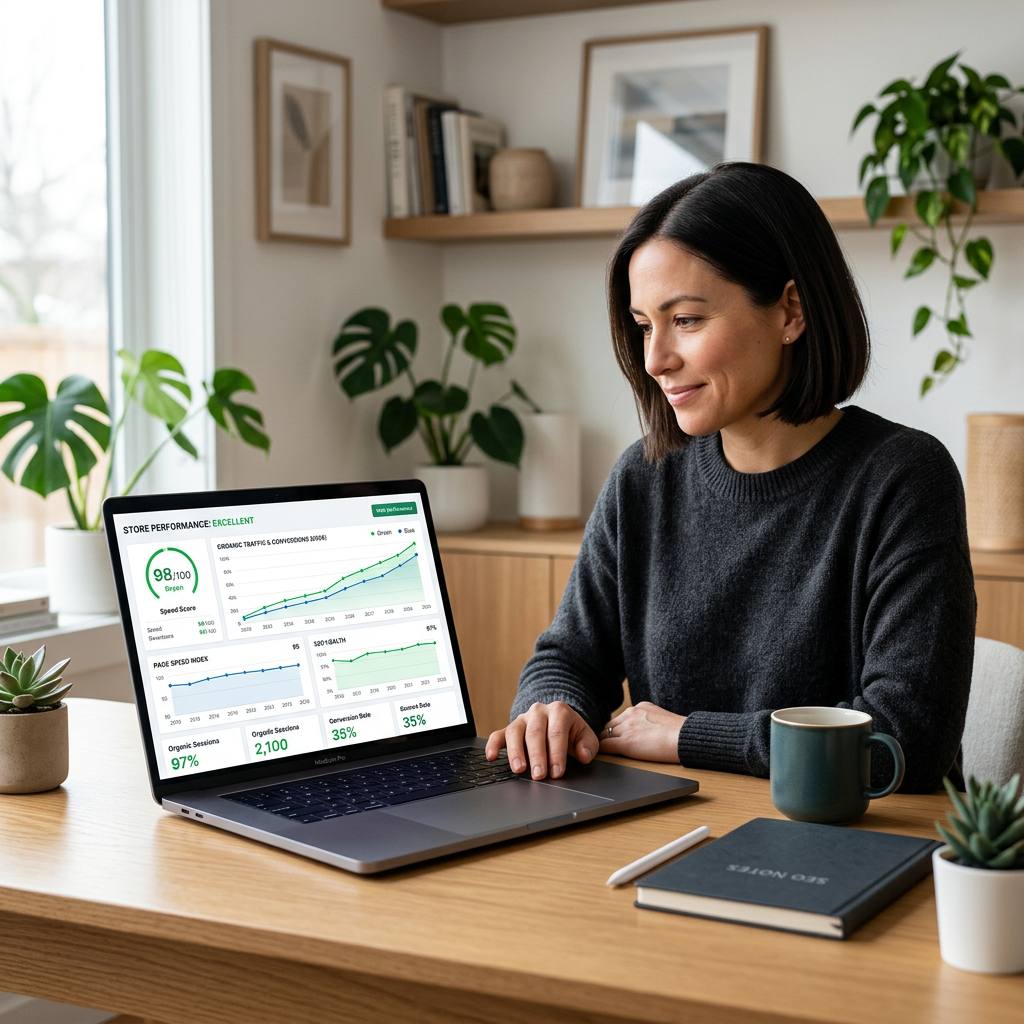
Before diving into content, you must ensure the engine is running correctly. A single blocked script or a broken canonical tag can negate months of content effort. You can use the Free Shopify Store SEO Checker to perform a diagnostic on your URL, identifying immediate errors in titles, speed, and schema markup that require intervention.
Architecture and URL Strategy
Mastering Shopify's URL Structure
Shopify uses a rigid URL structure (e.g., /products/ and /collections/). While you cannot change the subfolders, you must optimize the handles. Ensure your product handles are concise and keyword-focused. Avoid using dates or specific price points in URLs, as these make the content perishable. Instead, use evergreen slugs that remain relevant through 2026 and beyond.
Managing Collection Filters and Duplication
Shopify’s native filtering creates unique URLs for every combination of attributes. To prevent search engines from crawling thousands of near-duplicate pages, ensure your theme.liquid uses proper canonical tags. This directs search engines to the primary collection page, concentrating link equity rather than scattering it across filtered views like /collections/all?filter.p.m.color=Blue.
On-Page Optimization and Content
Strategic Meta Data Crafting
Your meta title is the first interaction a potential customer has with your brand. It should be a balance of high-intent keywords and brand identity. In 2026, search engines are increasingly sophisticated at detecting clickbait; focus on accuracy and utility. If you find your click-through rates are lagging, use a Free Shopify Meta Title & Description Generator to experiment with different value propositions that fit within the 155-character limit.
Product Descriptions That Convert
Search engines reward depth and originality. Avoid using the manufacturer’s boilerplate text, which creates duplicate content issues across the web. Instead, focus on benefit-led copy that answers specific customer anxieties. For merchants scaling their catalog, a Free Shopify Product Description Generator can provide a structural starting point, ensuring each page has the necessary keyword density without sacrificing the brand’s voice.
Visual SEO and Alt Text
Images are often the heaviest part of a Shopify page. Beyond compression, every image requires descriptive alt text. This is not just for accessibility; it is a primary signal for Google Image Search. A well-optimized alt tag describes the specific visual details of the product. If you have a large catalog, the Free Shopify Alt Text Generator can automate this process, ensuring every asset contributes to your SEO score.
Authority and Strategic Growth
The Power of Topical Clusters
SEO in 2026 is less about individual keywords and more about topical authority. By creating a cluster of content around a core product category, you signal to search engines that you are a specialist. Use a Free Shopify Blog Topic Generator to map out a series of supporting articles that answer the "how-to" and "why" questions surrounding your niche, linking them all back to your main collection pages.
Monitoring Net Profitability
SEO is an investment in long-term margin. Unlike paid ads, where costs per acquisition (CPA) fluctuate daily, organic traffic builds equity. To understand how your organic growth impacts your bottom line, use a Free Shopify Fee Calculator to see how reducing your reliance on paid channels improves your net profit per order when your Shopify plan and payment fees are accounted for.
Implementing this shopify seo checklist requires patience and precision. By focusing on these 15 high-impact fixes, you move beyond basic visibility into a position of market authority.
To ensure your store is fully optimized for the current landscape, run a diagnostic with our suite of growth tools.
Frequently Asked Questions
How often should I update my Shopify SEO checklist?
Perform a technical audit quarterly. However, content and meta-data should be reviewed monthly against performance data in Google Search Console to adapt to changing search trends in 2026.
Does Shopify's internal search affect my SEO?
Not directly, but analyzing internal search terms gives you insight into the language your customers use, which should be integrated into your product titles and H1 tags for better external search ranking.
Are Shopify tags useful for SEO?
Product tags are primarily for internal organization and filtering. They do not act as meta keywords and can actually create 'thin content' pages if indexed. Use them for navigation, but keep them hidden from search engines.
What is the most important SEO factor for Shopify in 2026?
Site speed and mobile user experience (Core Web Vitals) remain the most critical technical factors, followed closely by high-quality, original content that demonstrates E-E-A-T (Experience, Expertise, Authoritativeness, and Trustworthiness).