

Key Takeaways
- Prioritize Manual Collections: For high-volume keywords, manual or automated collections outperform tag-filtered pages because Shopify does not allow unique meta data or H1s for
/collections/all/tagURLs. - Optimal URL Length: Keep collection handles under 70 characters to ensure maximum visibility in search engine results pages (SERPs).
- Internal Link Depth: Ensure no high-priority collection is more than three clicks away from the homepage to maintain a healthy crawl budget and PageRank distribution.
- Metafield Utilization: Use Shopify 2.0 Metafields to add unique, SEO-rich content to the bottom of collection pages without cluttering the product grid.
The architecture of a Shopify store dictates how search engines perceive the relationship between products. When a merchant masters Shopify collections SEO, they transform a simple list of items into a high-converting landing page that captures broad, intent-driven search traffic.
The Architecture of Shopify Collections
Search engines favor hierarchy. A well-structured store uses collections not just for navigation, but as thematic pillars that signal authority to Google. In 2026, the distinction between a 'dumping ground' for products and a curated collection is the difference between page one and page ten.
Technical Specs for Collection Pages
| Attribute | Recommendation / Limit | Impact Level |
|---|---|---|
| Meta Title | 55–60 Characters | High |
| Meta Description | 145–155 Characters | Medium |
| Collection Handle (URL) | < 70 Characters | High |
| Featured Image Size | 1200 x 628 px (WebP) | Medium (Social Sharing) |
| H1 Header | 1 per page (Required) | High |
| Description Placement | Above and Below Grid | Low (UX) / High (SEO) |
Automated vs. Manual Collections
Automated collections use conditions (like product type, price, or tag) to pull in items. From an SEO perspective, these are identical to manual collections as they generate a clean /collections/handle URL. The choice depends on inventory turnover. If a merchant frequently adds new products, automated collections ensure that new arrivals instantly contribute to the internal linking structure of that SEO pillar.
The Shopify Tag Dilemma
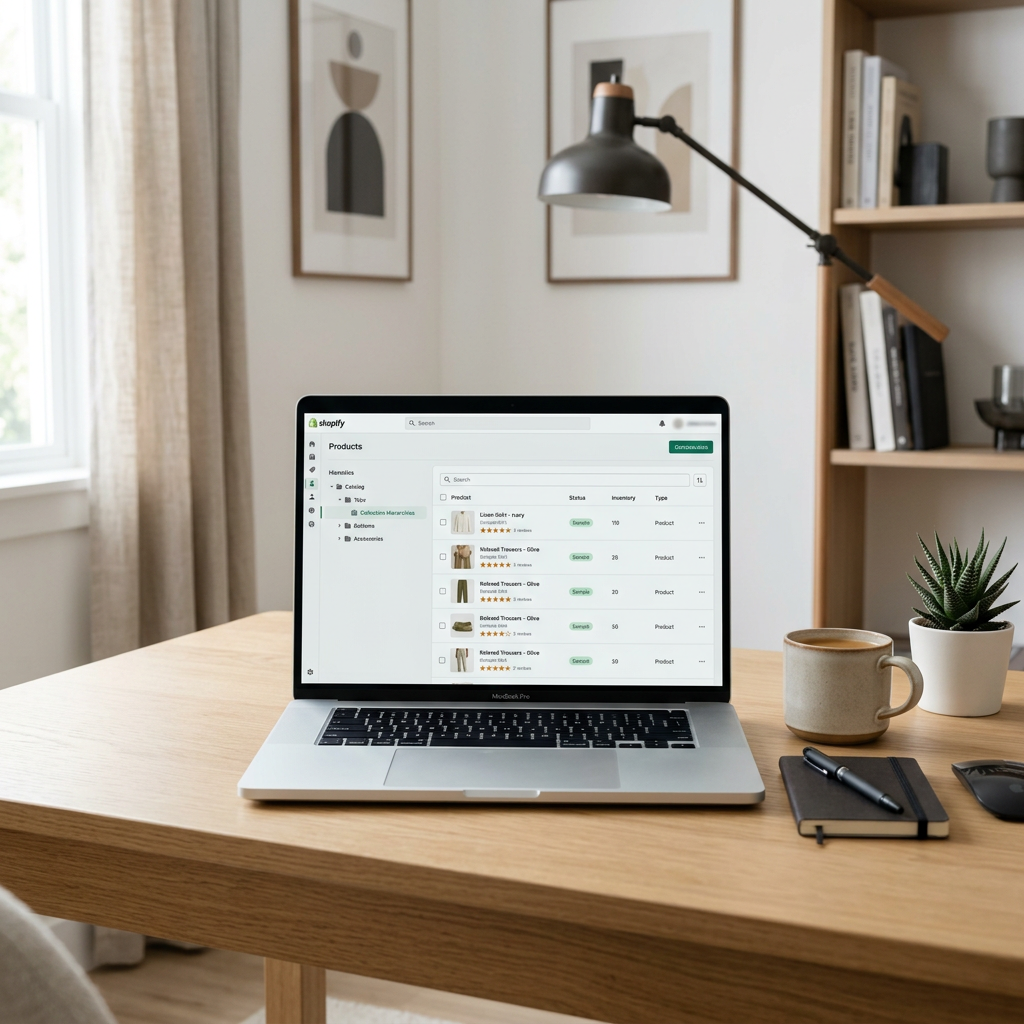
Many merchants rely on tags to filter collections. While tags are excellent for user experience (UX), they are often a trap for SEO. When a user clicks a tag filter, Shopify generates a URL like /collections/mens-boots/leather. By default, this page shares the same meta title and description as the parent collection.
Why Tags Often Fail SEO
Search engines see these filtered pages as duplicate content. If a merchant wants to rank for "Men's Leather Boots," creating a dedicated collection is superior to using a tag filter on the "Men's Boots" page. A dedicated collection allows for a custom H1, unique descriptive text, and specific schema markup.
Pro-Tip: If a tag-filtered view receives significant search volume, convert that tag into a standalone collection. You can then use the Free Shopify Meta Title & Description Generator to craft unique snippets that prevent keyword cannibalization between the parent and sub-collection.
Managing Canonical Tags
To prevent duplicate content issues, merchants should ensure their theme uses canonical tags correctly. A filtered collection page should ideally point back to the main collection unless it has been intentionally optimized as a unique landing page. This consolidates link equity and prevents Google from indexing thousands of thin, filtered variations of the same product list.
Optimizing Collection Content and Metadata
The collection description is the most underutilized real estate in Shopify. Most themes place this text at the top of the page, which can push products "below the fold." Using Online Store 2.0 features, merchants can split descriptions, keeping a short hook at the top and a detailed, keyword-rich deep dive at the bottom.
Strategic Internal Linking
Internal links are the connective tissue of Shopify collections SEO. A store's navigation menu should link to top-level collections, while the collection descriptions themselves should link to related sub-collections or educational blog posts. For example, a "Sustainable Yoga Mats" collection might link to a guide on "How to Clean Natural Rubber." You can generate these content ideas using a Free Shopify Blog Topic Generator to build topical authority around your collections.

Analyzing On-Page Performance
Before making structural changes, it is vital to understand the current state of a store's technical health. Using the Free Shopify Store SEO Checker allows a merchant to identify missing alt text, slow-loading collection images, or broken headers that may be hindering the ranking potential of their product groupings.
Site Structure and Navigation Design
A flat site structure is generally preferred for e-commerce. This means most products are only one click away from a collection, and most collections are one click away from the home page. This "hub and spoke" model ensures that search engine crawlers can efficiently discover and index every SKU.
Breadcrumb Navigation
Breadcrumbs (e.g., Home > Men's Shoes > Boots) are essential for Shopify collections SEO. They provide clear paths for crawlers and improve the user experience by allowing shoppers to jump back to higher-level categories easily. Implementing JSON-LD breadcrumb schema ensures these paths appear in Google Search results, which can improve click-through rates.
Collection Image Alt Text
Every collection has a featured image. These images appear in search results and social previews. Merchants should treat these with the same rigor as product images. If the featured image is not descriptive, it misses an opportunity for image search traffic. A Free Shopify Alt Text Generator can help maintain consistency across a large catalog.
Conclusion
Structuring a Shopify store requires a balance between logical organization and technical SEO best practices. By prioritizing dedicated collections over tag filters for high-value keywords and ensuring a shallow link depth, merchants create a foundation that both search engines and customers can navigate with ease. Start by auditing your current structure with the ListerRank Free Shopify Store SEO Checker to identify your biggest opportunities for growth.
FAQ
Q: Should I use tags or categories for my Shopify store? A: Shopify doesn't have a "category" system like WordPress; it uses Collections. Use Collections for SEO-targeted landing pages and Tags for granular filtering (like size or color) that doesn't necessarily need to rank on Google.
Q: How many products should be in an SEO-optimized collection? A: There is no hard limit, but aim for at least 3-5 products to avoid a "thin content" penalty. If a collection has dozens of pages, ensure you have a robust pagination strategy or use "Load More" buttons that search engines can follow.
Q: Can I change a collection URL handle without losing SEO rank? A: Yes, but you must check the box to "Create a URL redirect" within the Shopify admin when changing the handle. This creates a 301 redirect from the old URL to the new one, preserving most of your link equity.