
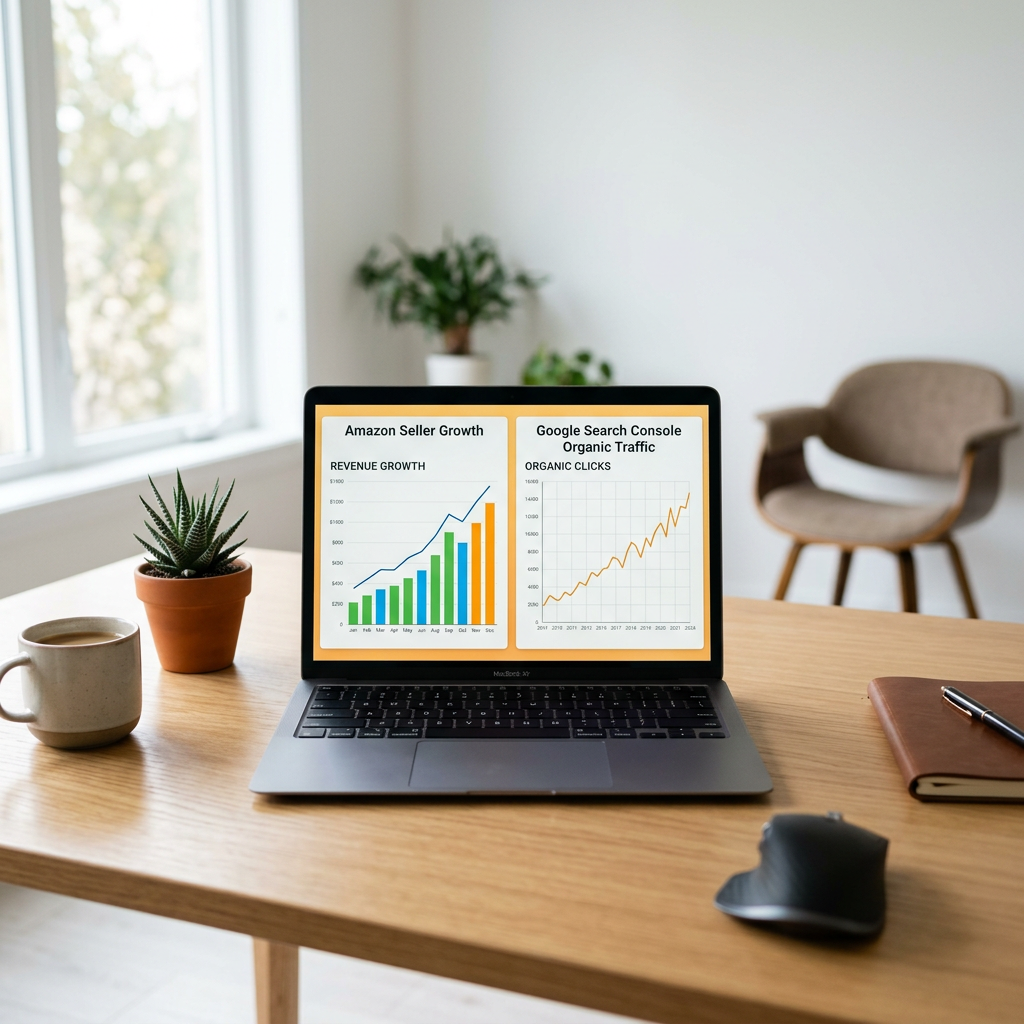
The digital landscape of 2026 demands a dual-engine strategy for e-commerce success. While Amazon functions as a high-intent transactional ecosystem, Google serves as a discovery engine that feeds the top of the sales funnel. Navigating the nuances of amazon seo vs google seo for listings determines whether a brand captures a slice of the market or fades into the noise of millions of competing SKUs.
The Fundamental Divide: Intent vs. Information
Google is a universal search engine designed to organize the world’s information. Its algorithm, driven by advanced AI like Gemini 2.0, prioritizes E-A-T (Expertise, Authoritativeness, and Trustworthiness) and user experience metrics. Google wants to answer a question, whether that question is "What are the best noise-canceling headphones?" or "How do I fix a leaky faucet?"
Amazon’s A10 algorithm, conversely, is purely transactional. Amazon’s only goal is to maximize Revenue Per Click (RPC). It doesn’t care about the philosophical nuances of a product; it cares about the likelihood of a conversion. If a listing converts at 15% for the term "ergonomic office chair," Amazon will rank it higher than a better-written listing that only converts at 8%.

Key Algorithmic Differences in 2026
| Feature | Google SEO | Amazon SEO |
|---|---|---|
| Primary Goal | Relevance & Information | Conversion & Sales Velocity |
| Ranking Factor | Backlinks & Core Web Vitals | Sales History & Reviews |
| Keyword Type | Long-tail & Informational | High-intent & Short-tail |
| Content Length | 1,500+ Words (Articles) | 200 Words (Bullet Points) |
| Off-page Influence | Massive (Backlinks) | Low (External Traffic Only) |
Optimizing the Listing Structure for Both Worlds
To bridge the gap between these two giants, sellers must understand how to satisfy both the bot and the buyer. Google crawls the meta-data and the visible text of an Amazon listing, but it places significant weight on the URL structure and the H1 tag equivalent—the product title.
Title Optimization
Amazon rewards titles that are keyword-dense and provide immediate utility. However, Google truncates titles in the search results after approximately 60 characters. A high-performing title in 2026 must lead with the most important keywords and the brand name to satisfy both. If you are struggling to balance length and keyword density, using a Free Amazon Title Generator can help you stick to the Brand + Keyword + Feature pattern that satisfies both algorithms.
Leveraging Bullet Points for Conversion and Crawling
Amazon bullet points are the primary real estate for selling the "why" of a product. While Google’s indexation of these is less direct than the title, they contribute to the overall content thickness. Each bullet should lead with a benefit in all caps followed by technical details. This structure helps mobile shoppers on Amazon scan quickly while providing Google with enough context to categorize the page. For sellers looking to optimize this section, the Free Amazon Bullet Point Generator provides benefit-first copy that aligns with 2026's mobile-first indexing standards.

The Role of External Traffic and Authority
In 2026, Amazon's A10 algorithm significantly rewards listings that drive "outside" traffic. Driving traffic from Google Search or social platforms to an Amazon listing acts as a massive ranking signal. It tells Amazon that your product is a destination, not just a commodity.
Tip: Use Google Ads to target niche, long-tail keywords that link directly to your Amazon listing. This boosts your sales velocity, which in turn improves your organic Amazon SEO ranking.
Backend Keywords vs. Meta Tags
Amazon provides a hidden field for backend keywords, limited to 250 characters. These are strictly for the A10 algorithm and do not appear to the customer. Google, however, does not see these. Google relies on the visible Amazon product description SEO to understand the page's depth. To ensure you aren't missing out on invisible ranking power, use Free Amazon Keyword Research tools to generate a clean backend string that avoids punctuation and repetition.
Technical Compliance and Conversion Optimization
Compliance with Amazon's formatting rules is non-negotiable in 2026. While Google prefers clean HTML and schema markup, Amazon has strict limitations on what sellers can do. Using an Amazon Product Description HTML Editor 2026 ensures your descriptions are formatted correctly using the few tags Amazon still allows, such as line breaks and bolding, without triggering a listing suppression.
Measuring the Impact of SEO on Profitability
SEO is not just about rankings; it’s about margins. A listing that ranks organically on both Google and Amazon reduces the reliance on high-bid PPC campaigns. When evaluating your SEO success, you must factor in the total cost of sales. Use the Free Amazon FBA Calculator to determine if your optimized price point still maintains healthy margins after factoring in the referral and fulfillment fees associated with increased volume.
Content Depth: Descriptions and A+ Content
Google loves long-form content. Amazon shoppers do not. This conflict is best resolved through A+ Content (formerly EBC). While the text within A+ images isn't indexed by Amazon’s internal search, Google frequently crawls the alt-text and the technical description fields.
- Alt-Text for Google: Use descriptive keywords in the alt-text of your A+ images.
- The Hidden Description: Always fill out the standard product description field even if you have A+ content active. This text is what Google mostly uses for its snippets.
- Visual Hierarchy: Use the Free Amazon Description Generator to create a scannable structure that caters to the 5-second attention span of an Amazon buyer while maintaining the keyword density Google requires.
Conclusion
Winning the battle of amazon seo vs google seo for listings requires a balanced approach. You must serve the transactional needs of the Amazon customer while providing the contextual depth required by Google's crawler. By optimizing your titles for both length and intent, leveraging backend keywords for the marketplace, and ensuring technical compliance, you create a listing that attracts traffic from all corners of the web.
To see where your current listings fall short on these 2026 standards, use the Free Amazon Listing Analyzer to get a comprehensive performance score.
Frequently Asked Questions
Does Google index Amazon backend keywords?
No, Google does not crawl Amazon's 250-character backend search terms. Google only indexes visible content like the title, bullet points, and product description.
Which is more important for Amazon rankings: sales or keywords?
Sales velocity and conversion rate are more important than keyword density for ranking inside Amazon's ecosystem in 2026, though keywords are necessary for initial discoverability.
Can I use the same SEO strategy for both Google and Amazon?
No. Google requires informative, long-form content and backlinks, whereas Amazon requires high-conversion copy, sales history, and specific marketplace formatting.