

Winning the Buy Box and maintaining top-tier placement in eBay’s Best Match search results requires more than just picking a number. Modern sellers must navigate a complex landscape of automated repricers, shifting buyer expectations for free shipping, and the platform’s increasingly sophisticated algorithmic preferences. This comprehensive guide outlines the exact eBay pricing strategy for sellers to maximize sell-through rates while protecting bottom-line margins in 2026.
The Psychology of eBay Pricing in 2026
Buyers on eBay are fundamentally different from those on Amazon or Etsy. While Amazon shoppers prioritize speed and Etsy shoppers prioritize uniqueness, the typical eBay buyer in 2026 is looking for value relative to condition. Your pricing strategy must reflect this search for a "deal," even if you are selling brand-new items.
Psychological Price Points and Anchoring
The "Left-Digit Effect" remains a powerhouse in 2026 commerce. Pricing an item at $19.95 rather than $20.00 significantly impacts the perceived value and conversion rate (CVR). On eBay, where search results are often displayed in a list or grid format, these small fluctuations determine whether a buyer clicks your listing or your competitor's.
Anchoring is another critical tactic. By using the "Strike-Through Pricing" (STP) feature, available to those with an eBay Store subscription, you show the buyer a higher historical price or MSRP compared to your current offer. This creates a sense of immediate savings that triggers the impulse to purchase.
Competitive Benchmarking and Market Analysis
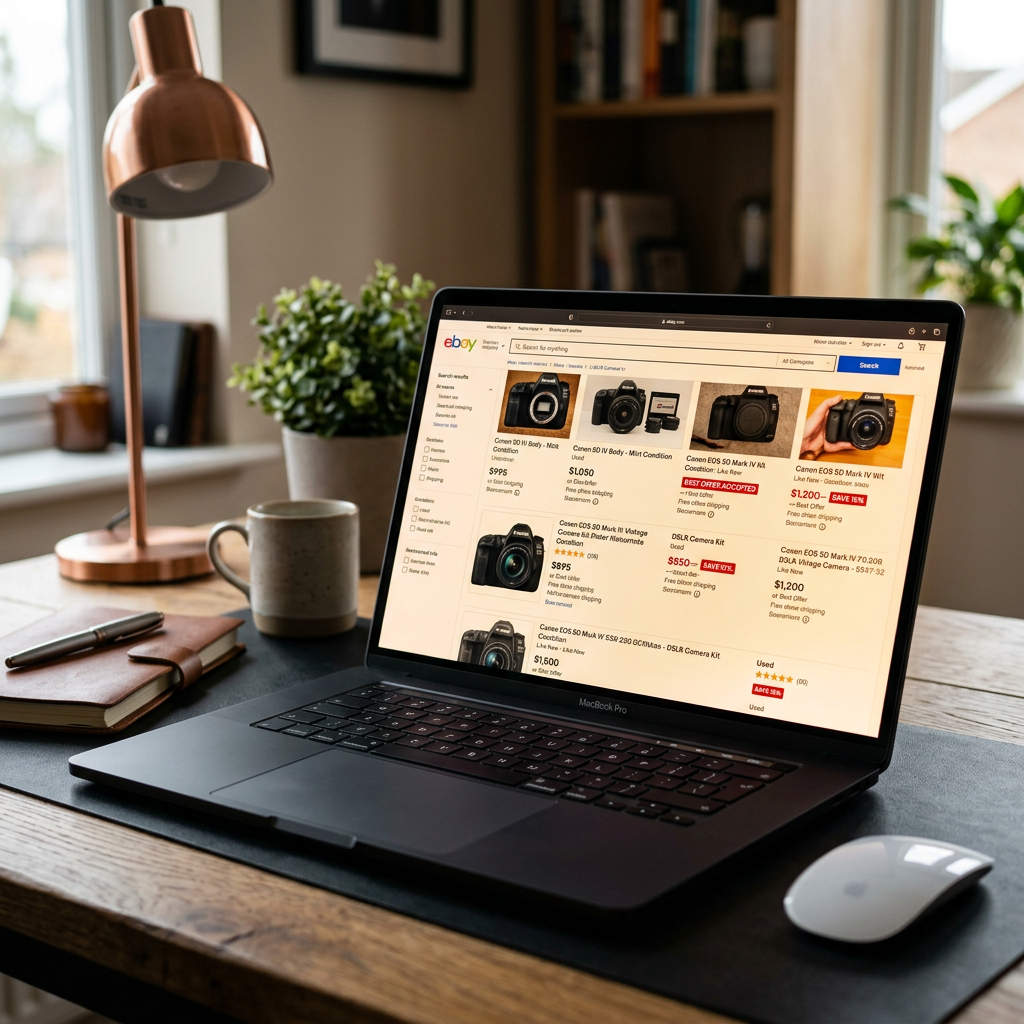
You cannot price in a vacuum. eBay’s Cassini algorithm heavily weights your price against identical or similar items. If your price is 15% higher than the market average without a clear value-add (like faster shipping or longer returns), your search visibility will decrease. Use tools like Terapeak to analyze the last 90 days of sold data, focusing on the "Average Sold Price" rather than the "Current Listed Price."
Identifying Your Market Position
Decide if you are a volume seller or a margin seller. Volume sellers typically price at the lowest 10% of the market to trigger quick sales and high inventory turnover. Margin sellers often utilize optimized eBay store categories to build a brand presence that justifies a 5-10% price premium.
| Strategy | Target Margin | Turnover Speed | Best For |
|---|---|---|---|
| Economy | 5-15% | Very High | Commodities, generic electronics |
| Mid-Range | 20-35% | Moderate | Brand name apparel, home goods |
| Premium | 40%+ | Slow | Rare collectibles, refurbished luxury |
Calculating the True Cost of a Sale
Internalizing your costs is the most overlooked step in an eBay pricing strategy for sellers. In 2026, many sellers fail because they account for the Final Value Fee (FVF) but forget about the per-order fixed costs and the impact of ad spend. To ensure you aren't selling at a loss, use the free eBay fee calculator to see your real take-home pay after all deductions.
Factoring in Category-Specific Fees
eBay fees are not uniform. While most categories hover around 13.25% + $0.30, categories like heavy machinery or high-value sneakers have vastly different structures. Before listing an item, use the free eBay final value fee calculator to determine if your price point is sustainable within that specific niche.
Fixed Price vs. Auction: Choosing the Right Format
In 2026, over 85% of eBay transactions occur via the Fixed Price (Buy It Now) format. Auctions are no longer the default, but they serve a specific role in a sophisticated pricing strategy. Auctions are best used for items where the market value is unknown or for liquidated stock where the goal is a guaranteed sale within 7 days.
The Hybrid Approach
A common 2026 tactic is starting an item as an auction with a high "Buy It Now" option. This captures both the urgent buyer and the bargain hunter. However, for most modern inventory, Fixed Price listings are superior for SEO because they retain their sales history over time. High-volume sellers should use the out of stock option to keep these listings active even when inventory dips, preserving their search ranking.

Shipping Strategy and Its Impact on Search Price
eBay’s algorithm presents the "Landled Cost" (Price + Shipping) to the buyer. If you price an item at $10 with $10 shipping, Cassini treats it increasingly lower in rank compared to an item priced at $20 with free shipping. In 2026, free shipping is effectively a requirement for the top 5 spots in search results.
Psychological vs. Logical Shipping
Tip: Buyers prioritize the total cost at checkout. However, the 'Free Shipping' badge acts as a visual filter. Most buyers now check the 'Free Shipping' box in the sidebar before even looking at the results.
When building your pricing model, bake the average shipping cost into the item price. This doesn't just help with conversion; it also helps you qualify for "Top Rated Seller" status, which provides a 10% discount on final value fees, directly impacting your margin. To further assist with SEO, ensure you are optimizing your returns policy alongside your shipping costs, as eBay rewards sellers who offer 30 or 60-day free returns with higher search visibility.
Leveraging Best Offer and Promotions
The "Best Offer" feature is a powerful tool for price discovery. It allows you to list at a slightly higher "dream price" while signaling to buyers that you are open to negotiation. In 2026, listings with Best Offer enabled see a 12-15% higher engagement rate than those without.
Promoted Listings Standard vs. Advanced
To compete in 2026, you must factor "marketing tax" into your pricing. Promoted Listings Standard operates on a cost-per-sale basis, meaning you only pay if the item sells. When deciding your listing price, check the "Suggested Ad Rate" provided by eBay. If the average ad rate is 8%, and your margin is only 10%, your pricing strategy is unsustainable.

Automation and Dynamic Pricing
Manual pricing is a bottleneck for any seller with more than 50 SKUs. Sophisticated sellers use dynamic pricing software that monitors competitor changes in real-time. If a competitor goes out of stock, your software should automatically increase your price to capture the higher margin. Conversely, if the market price drops, you need to react within hours to maintain your eBay seller rank.
Item Specifics and Pricing Visibility
Your price only matters if buyers can find your item. If your item specifics are incomplete, you won't show up in filtered results regardless of how low your price is. Many professional sellers use item specifics automation tools to ensure their listings appear when buyers filter by size, color, or material, ensuring their price is seen by the most relevant audience.
Multi-Variation (GTC) Pricing Strategies
If you sell products with different sizes or colors, use a multi-variation listing (Good 'Til Cancelled). This centralizes your sales history into a single URL, which boosts your SEO. You can price different variations at different levels within the same listing—for example, a size Large shirt might be $25 while a less popular Small is $20. This allows you to maintain a "Starting at" price that looks attractive in search results while protecting margins on popular items. For more details, see our guide on multi-variation listing optimization.

Finalizing Your 2026 Pricing Framework
A successful eBay pricing strategy for sellers is not a "set it and forget it" task. It requires weekly reviews of your sell-through rate and monthly adjustments to your overhead calculations. By combining competitive benchmarking, psychological pricing, and technical SEO with tools like the free eBay title generator to drive traffic, you can build a sustainable, profitable business on the platform.
Mastering your margins is the difference between a hobby and a business. Start by auditing your current inventory and using professional tools to find the sweet spot between visibility and profit. Use the ListerRank suite of free tools to optimize every aspect of your eBay presence today.
Frequently Asked Questions
Should I always price my items lower than the competition on eBay?
No. Pricing the lowest can start a 'race to the bottom' that destroys margins. Instead, aim to be within the bottom 20% of the price range while offering better service markers, such as 1-day handling or 60-day returns, which Cassini rewards with higher search visibility.
How does the Best Offer feature affect my ranking in eBay search?
The Best Offer feature itself is a positive signal for Cassini, as it increases the likelihood of a transaction. More importantly, when an offer is accepted, it counts as a sale, which boosts your listing's sales history and search rank for future shoppers.
How much room should I leave for negotiation when setting a starting price?
Typically, leaving a 15-20% buffer is ideal for the Best Offer feature. This allows you to accept an offer that makes the buyer feel they won a 'deal' while still keeping the final sale price within your target profit margin.
Does changing my prices frequently hurt my listing visibility?
On the contrary, moderate price activity can signal to eBay that the listing is being actively managed. However, extreme fluctuations (e.g., doubling the price overnight) can trigger a temporary manual review or a dip in conversion rate, which may eventually lower your rank.
Is it better to offer free shipping or a lower item price?
In 2026, free shipping is almost always better. eBay's search algorithm prioritizes listings with free shipping, and most buyers use the 'Free Shipping' search filter, which would hide your listing entirely if you charged for shipping separately.
How do I use eBay's Promoted Listings without losing my profit margin?
You must treat the Promoted Listings fee as a variable cost of goods sold. Increase your base price slightly to absorb the ad rate, and only promote items with a high enough margin (typically 25%+) to handle the additional 5-10% fee.
How often should I review and update my eBay pricing strategy?
For high-volume sellers, a weekly audit is recommended. For smaller sellers, a monthly review using Terapeak data ensures that your prices haven't drifted too far from the shifting market average as new competitors enter the space.
What is a good conversion rate for an eBay listing in 2026?
A healthy conversion rate typically falls between 1.5% and 3.5% for most categories. If your CVR is below 1%, it is a strong signal that either your price is too high or your listing quality (images/descriptions) is not justifying the price point.