

E-commerce sales tax obligations represent the most significant administrative hurdle for modern online merchants. Failing to track economic nexus or mismanaging marketplace facilitator rules can lead to back taxes that erode thin margins. This guide provides a definitive framework for staying compliant across every U.S. state in the 2026 fiscal year.
The Landscape of Sales Tax for Online Sellers in 2026
Sales tax is a consumption tax charged by state and local governments on the sale of goods and services. For online sellers, the responsibility to collect and remit this tax hinges on the concept of 'nexus.' In 2026, every state with a sales tax has established economic nexus laws, meaning your physical location matters less than where your customers are located.
Most states enforce a threshold of $100,000 in gross sales or 200 separate transactions. However, several states have moved toward a revenue-only model to simplify compliance for small businesses. You must monitor these thresholds monthly to ensure you do not trigger a registration requirement mid-year without realizing it.
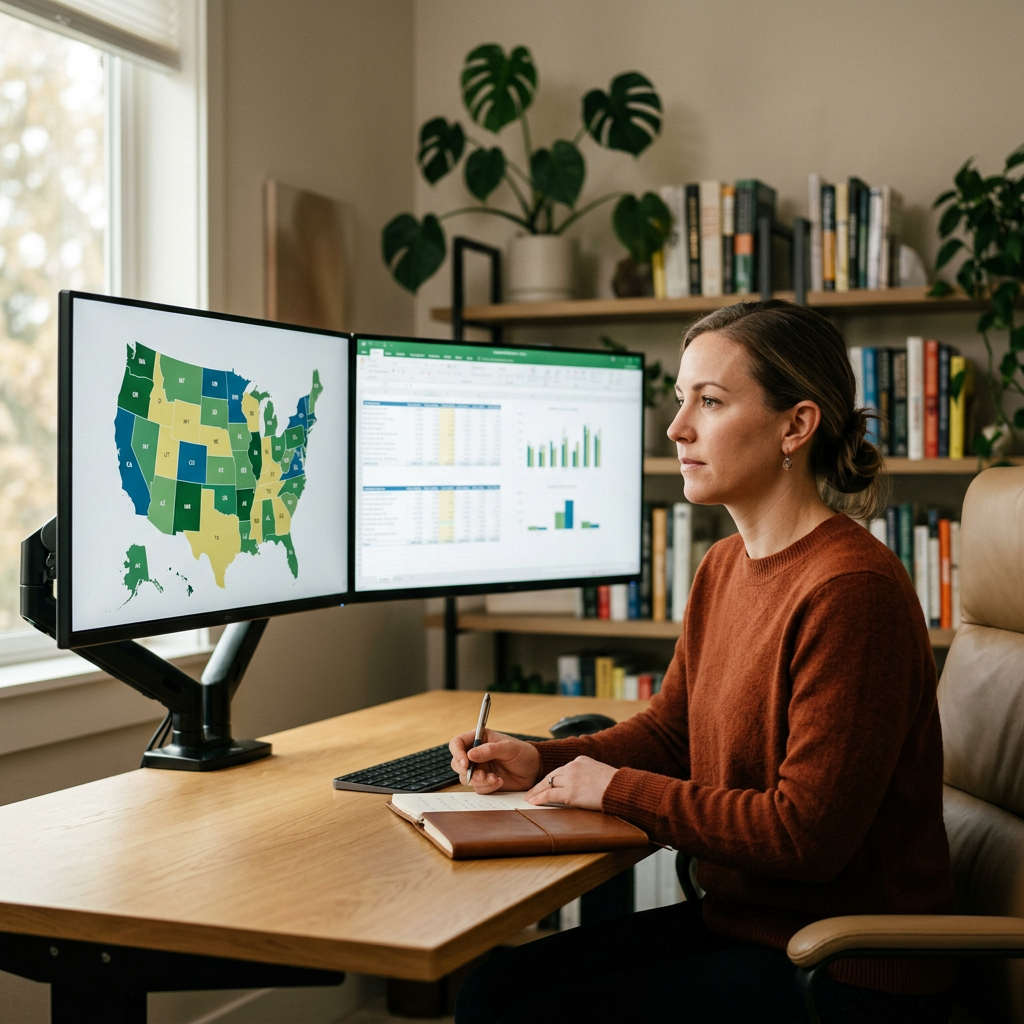
Physical vs. Economic Nexus
Physical nexus is triggered by having a 'brick and mortar' presence, employees, or inventory in a state. If you use third-party logistics (3PL) providers or Amazon FBA, your inventory stored in their warehouses often creates physical nexus. Even if you don't meet the $100,000 revenue mark, the presence of a single unit of inventory can legally obligate you to register for a sales tax permit.
Economic nexus, popularized after the Wayfair decision, focuses strictly on economic activity. As you expand your reach, learning how to sell on multiple marketplaces requires a robust system to track these multi-state triggers simultaneously.
Marketplace Facilitator Laws and Your Responsibility
Marketplace Facilitator Laws require platforms like Amazon, eBay, Walmart, and TikTok Shop to collect and remit sales tax on behalf of their third-party sellers. This significantly reduces the burden for individual merchants, but it does not eliminate it entirely.
Tip: Even if a marketplace collects the tax, most states still require you to register for a permit and file 'zero-returns' if you have nexus in that state.
Reporting Requirements for Major Platforms
When selling on Amazon, the platform handles the calculation at checkout. However, your gross sales on Amazon still count toward your economic nexus totals for other platforms. If you sell $90,000 on Amazon and $20,000 on a personal Shopify store to customers in the same state, you have exceeded the typical $100,000 threshold and must collect tax on the Shopify sales yourself.
| Platform | Tax Collection Responsibility | Seller Action Required |
|---|---|---|
| Amazon FBA/FBM | Marketplace Facilitator | Register in nexus states; file returns |
| Shopify (Direct) | Seller | Enable tax engine; collect and remit |
| TikTok Shop | Marketplace Facilitator | Monitor nexus for non-TikTok sales |
| Walmart Marketplace | Marketplace Facilitator | Report gross sales in annual filings |
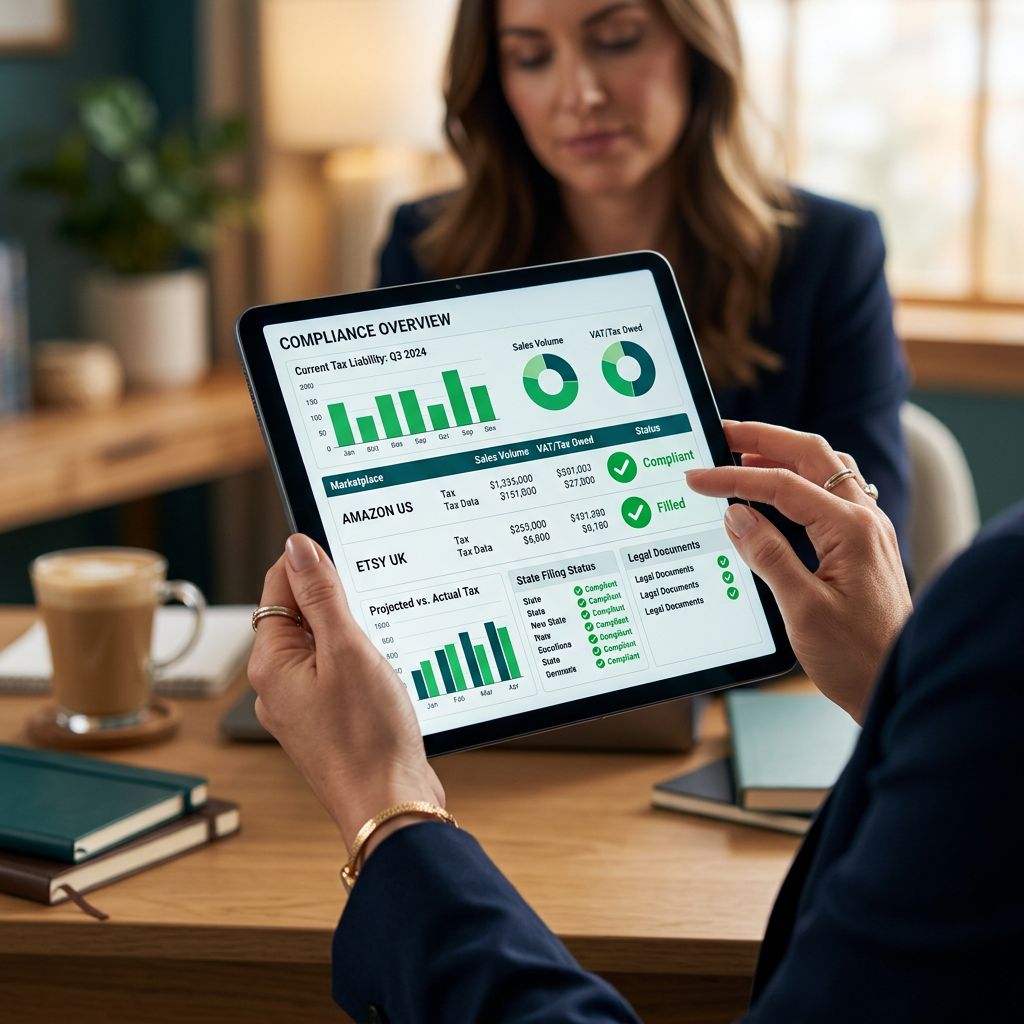
Step-by-Step Compliance Workflow for 2026
Maintaining compliance requires a proactive rather than reactive approach. By integrating tax monitoring into your multi-channel inventory management software 2026 strategy, you can automate much of the data collection needed for filings.
1. Determine Where You Have Nexus
Review your sales reports from the last 12 months. Group your sales by shipping destination. If you approach the $100,000 mark or the transaction limit in a specific state, visit that state's Department of Revenue website to verify their current 2026 thresholds. Some states, like Kansas, have unique requirements for remote sellers compared to traditional retailers.
2. Register for Sales Tax Permits
Do not collect tax before you have a permit. It is illegal to charge a customer sales tax without a valid state tax ID. Apply for a permit before you hit the threshold to allow for processing time. Once you receive your ID, you must update your tax settings in your Shopify, eBay, or Walmart seller dashboards.
3. Calculate and Collect Tax
Ensure your pricing accounts for the net profit after all fees. Use an Amazon FBA Calculator to estimate your referral and fulfillment costs so you know exactly how much margin you have left to cover administrative compliance costs. In 2026, most shopping carts offer 'destination-based' sourcing, meaning the tax rate is determined by where the buyer receives the product.
Product Taxability and Exemptions
Not all items are taxed equally. In many states, clothing, groceries, and dietary supplements are either exempt or taxed at a reduced rate. If your catalog includes these items, you must categorize them correctly in your backend systems.

Handling Tax-Exempt Sales
If you sell B2B (Business to Business), your customers may provide a resale certificate. This allows them to purchase items without paying sales tax. As the seller, you are responsible for keeping a digital copy of these certificates on file. If you are audited, the state will demand proof for every transaction where tax was not collected.
Filing and Remitting Returns
Filing frequencies are determined by the state and are usually based on your monthly sales volume. You may be required to file monthly, quarterly, or annually. Missing a deadline can result in penalties and interest, even if the amount of tax owed is zero.
- Export data: Download sales reports that break down tax collected by state and local jurisdiction.
- Verify totals: Ensure the tax collected matches the expected rate for that period.
- File the return: Use the state's online portal or a third-party automation tool.
- Remit payment: Pay the collected funds via ACH or credit card.

The Risks of Non-Compliance
States have become increasingly aggressive in 2026 regarding e-commerce audits. They use data-sharing agreements with marketplaces to identify sellers who have nexus but have failed to register. The cost of an audit often exceeds the tax itself due to compounded interest and failure-to-file penalties.
Integrating your tax workflows with other listing efforts is essential. While using a free Amazon keyword research tool helps drive the sales that cause nexus, your backend operations must be ready to catch the resulting tax liability. Effective compliance ensures that your growth is sustainable and that you aren't one audit away from insolvency.
Conclusion
Sales tax compliance in 2026 is an ongoing process of monitoring thresholds and maintaining accurate records across multiple platforms. By understanding your nexus triggers and leveraging marketplace facilitator protections, you can focus on scaling your brand without fear of regulatory setbacks. Visit the ListerRank dashboard to access our suite of free tools for optimizing your e-commerce operations.
Frequently Asked Questions
Do I need to collect sales tax if I only sell on Amazon?
In most states, Amazon collects and remits sales tax for you under marketplace facilitator laws. However, you may still be required to register for a sales tax permit and file periodic returns in states where you have physical nexus, such as where your FBA inventory is stored.
What happens if I reach the nexus threshold mid-year?
Once you cross a state's economic nexus threshold, you are legally required to register for a permit and begin collecting sales tax on subsequent transactions. Most states provide a short grace period (usually 30-60 days) to complete your registration after the threshold is met.
How do I know if the products I sell are tax-exempt?
Taxability varies significantly by state. For instance, many states exempt most clothing items under a certain price or specific grocery staples. You should consult each state's Department of Revenue 'Taxability Matrix' or use automated tax software to categorize your SKUs correctly.
Can I just include the sales tax in my item price?
Generally, no. Most states require sales tax to be clearly stated as a separate line item on the invoice. 'Tax-inclusive' pricing is rare in the U.S. and can lead to complications during audits or when filing returns, as the state needs to see the exact tax collected from the consumer.
Do I need a sales tax permit for states where I use FBA warehouses?
Yes, inventory storage in a state typically creates physical nexus. Even if you do not meet the economic threshold of $100,000, the presence of your goods in an Amazon fulfillment center obligates you to follow that state's registration and filing requirements.
How do I handle sales tax for TikTok Shop and social commerce?
TikTok Shop acts as a marketplace facilitator in the U.S., similar to Amazon and eBay. They calculate, collect, and remit tax on your behalf. You must still track these sales as part of your total revenue to determine if you have reached economic nexus for your other sales channels, like your own website.
Is there a penalty for late sales tax registration?
Yes, states can impose penalties for 'failure to register' and 'failure to file,' which often include interest on the unpaid tax you should have collected. Some states offer Voluntary Disclosure Agreements (VDAs) that allow sellers to come forward and pay back taxes with reduced penalties.
Do I have to file a zero-return if I had no sales in a state?
If you hold an active sales tax permit in a state, you are almost always required to file a return by the deadline, even if you had zero taxable sales during that period. Failing to file a 'zero-return' can trigger automated late fees and the eventual cancellation of your permit.