

As of June 2026, voice-assisted shopping via Alexa and mobile devices has transitioned from a niche convenience to a primary conversion driver. To capture this segment, sellers must move beyond rigid keyword stuffing and embrace the linguistics of natural speech.
The Shift to Conversational Amazon SEO
Traditional search involves fragmented phrases like "noise canceling headphones." Voice search, however, typically uses full sentences such as, "Alexa, what are the best noise-canceling headphones for a long flight?" This shift requires a fundamental change in how you approach Amazon SEO vs. Google SEO for Listings in our 2026 Strategy Guide.
Voice queries are longer, more specific, and almost always phrased as questions. If your listing doesn't provide a direct answer to the user's intent, Alexa's algorithm—which prioritizes the 'Amazon's Choice' badge and high-velocity Prime items—will likely pass over your product in favor of a competitor who has mapped their content to these verbal triggers.
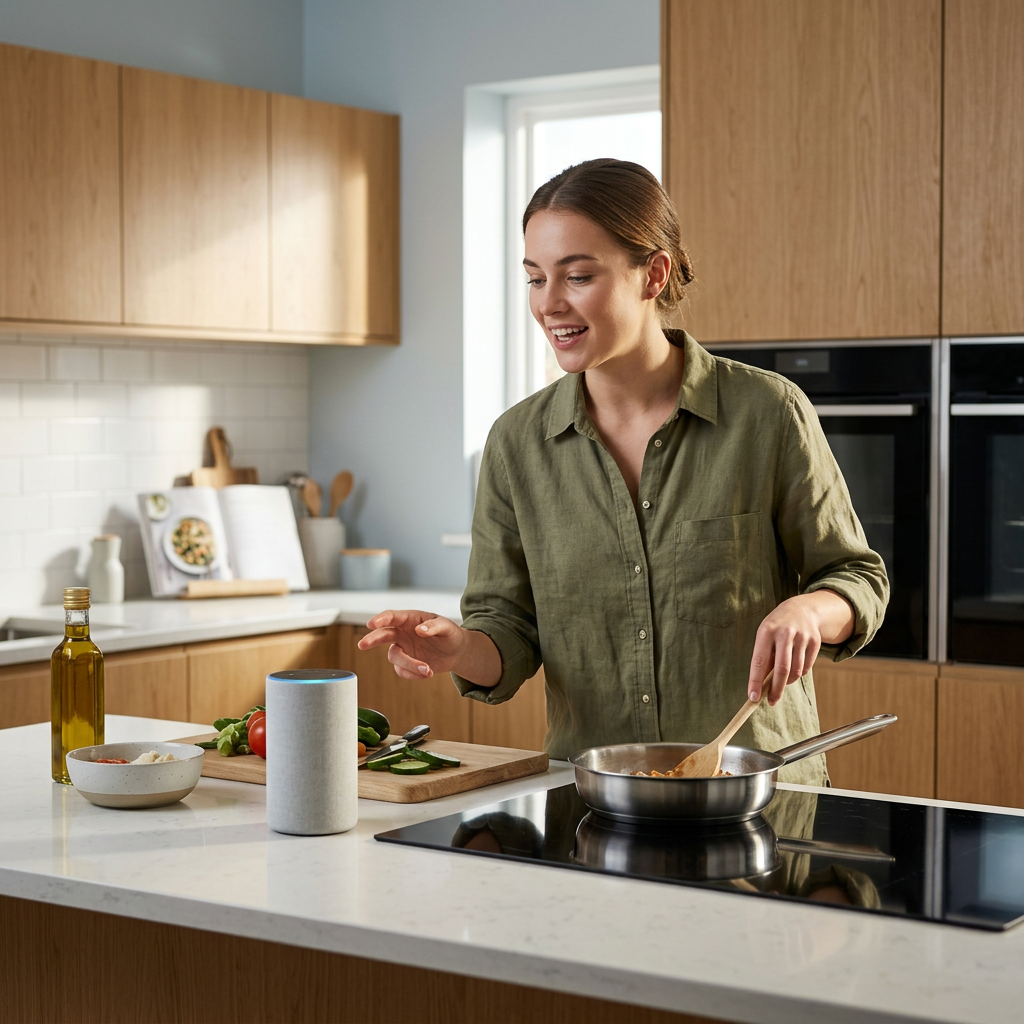
Identifying Voice-First Keywords
Voice keywords are characterized by their interrogative nature. People use who, what, where, when, and how when speaking to their devices. Unlike typing, which is labor-intensive, speaking is effortless, leading to "long-tail" strings that reveal deep buyer intent.
Mapping User Intent to Phrases
| Query Type | Traditional Search (Text) | Voice Search (Spoken) |
|---|---|---|
| Informational | Organic yoga mat | Alexa, which yoga mats are made from non-toxic materials? |
| Navigational | Anker charging cable | Find me a 6-foot Anker USB-C cable. |
| Transactional | Buy keto protein powder | Order the keto chocolate protein powder I bought last month. |
To find these high-intent phrases, use the Free Amazon Keyword Research tool to identify question-based strings that your competitors are neglecting. Focus on terms with 5+ words that reflect how a person would describe a problem they are trying to solve.
Optimizing Amazon Product Descriptions for Voice Search
Your product description is the primary data source for Alexa's voice responses when a customer asks for more details. In 2026, the algorithm favors descriptions that use natural syntax over those that use comma-separated keyword lists.
Use Natural Language and Flow
Avoid technical jargon that sounds jarring when read aloud by a synthetic voice. Instead, use a conversational tone that mirrors a salesperson speaking to a customer. When drafting your copy, read it out loud. If you stumble over a sentence, the voice assistant will too.
When building out these sections, the Free Amazon Description Generator can help structure your content into the scannable, benefit-rich format that voice assistants prefer. Ensure your most critical value propositions are in the first two sentences, as voice summaries are often truncated.
Implementing the FAQ Method
One of the most effective ways to rank for voice queries is to embed an FAQ style within your description or secondary images. Anticipate the "How do I..." and "Can this..." questions. For example, if you sell a waterproof speaker, include a sentence like: "If you are wondering if this speaker can go in the pool, the IPX7 rating ensures it stays safe even when submerged for 30 minutes."
Technical Optimization: The Backend and Formatting
While the frontend copy handles the "sound" of the listing, the backend must handle the "logic." Amazon’s A9 (and the evolving A10) engine uses backend search terms to bridge the gap between spoken slang and formal product titles.
Strategic Backend Keywords
Your backend search terms should include common verbal mispronunciations, synonyms, and regional dialects that you wouldn't necessarily put on the frontend. Use the Free Amazon Backend Keyword Generator to create a 250-byte string that excludes duplicates and focuses entirely on these hidden voice triggers.
Tip: Do not repeat keywords that are already in your title or bullet points. Alexa already indexes those; use the backend space for conversational variations like "birthday gift for 10 year old boy" instead of just "toys for boys."
Formatting for Speed and Clarity
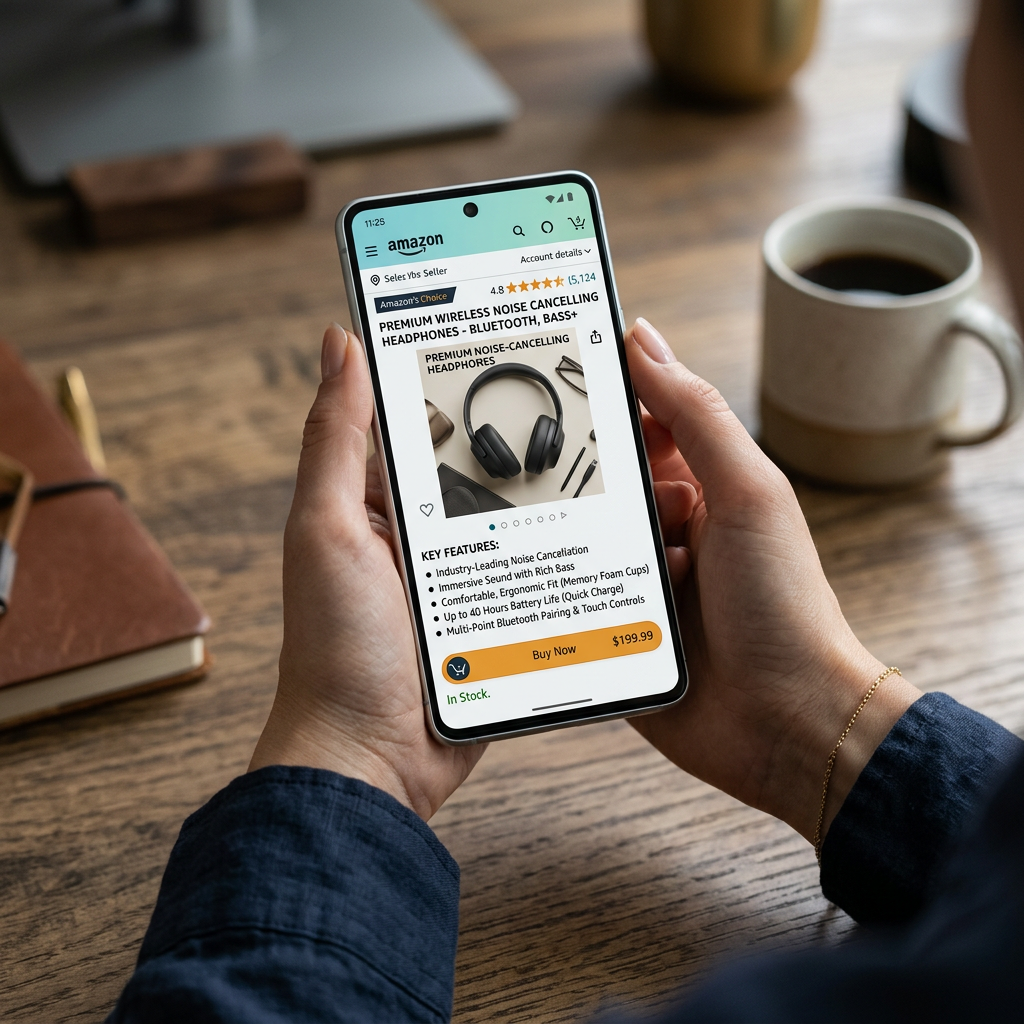
Voice search users are often on the move or multitasking. Consequently, Amazon prioritizes listings that load quickly and have clear, compliant formatting. Ensure your HTML is clean by using an Amazon Product Description HTML Editor for 2026 Compliance. Over-optimized HTML or broken tags can cause Alexa to skip over your content in favor of a cleaner data source.
The Role of Bullet Points in Voice Conversion
When a customer asks Alexa to "tell me about this product," the assistant typically reads the first two or three bullet points. If these are just a list of dimensions, you will lose the sale.
- Lead with the Benefit: Instead of "1000mAh Battery," use "Enjoy 12 hours of continuous playtime on a single charge."
- Keep it Concise: Voice assistants struggle with parenthetical statements or complex punctuation. Keep each bullet under 170 characters.
- Answer the Question: The Free Amazon Bullet Point Generator can assist in creating 5 benefit-first points that directly address common customer pain points.
Review your current performance with a Free Amazon Listing Analyzer to see if your bullet points are currently too dense for voice-to-text translation.
Conclusion
Optimizing Amazon listings for voice search in 2026 requires a transition from robotic keyword placement to empathetic, conversational storytelling. By focusing on long-tail question phrases, simplifying your syntax for Alexa's text-to-speech engine, and maintaining a clean backend, you position your brand to capture the growing segment of hands-free shoppers. For a deeper dive into general listing health, consult our Amazon Product Description SEO: 2026 Optimization Guide.
Start refining your strategy today by using the ListerRank suite of free optimization tools to outperform the competition.
Frequently Asked Questions
Does voice search affect Amazon's Choice badges in 2026?
Yes, Alexa is heavily biased toward recommending products with the Amazon's Choice or Best Seller badges. Optimizing for voice increases conversion rates, which in turn helps secure these critical badges.
How long should voice-optimized product titles be?
While the limit is 200 characters, voice assistants usually only read the first 60-70 characters. Use the Free Amazon Title Generator to ensure your most important keywords and brand name appear at the very beginning.
Should I use slang in my Amazon backend keywords?
Absolutely. Since voice search is informal, including common verbal shorthand or regional terms in your backend helps Alexa match your product to natural speech patterns.