
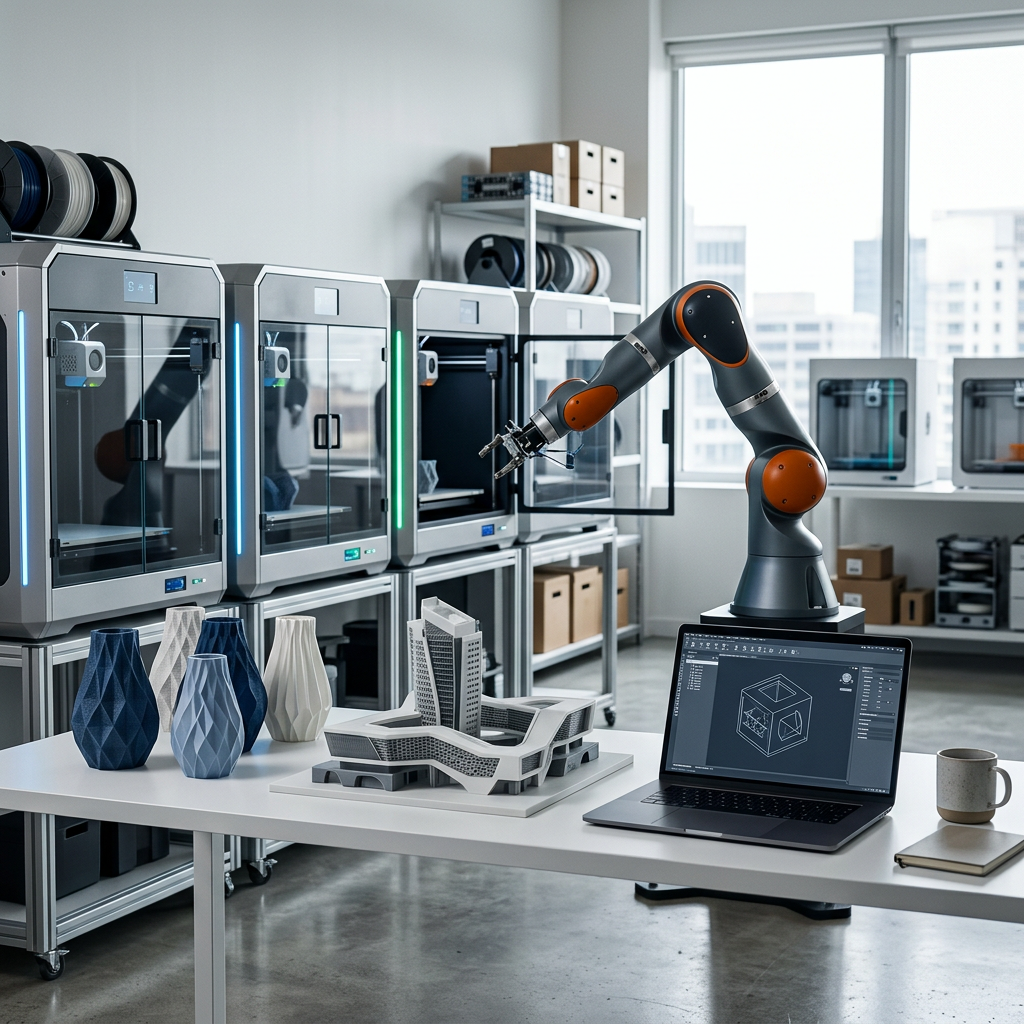
The barrier to entry for desktop manufacturing has vanished, but the delta between a hobbyist and a high-revenue merchant has never been wider. As of mid-2026, the marketplace is saturated with low-quality 'trinkets,' leaving a massive opening for sellers who treat their workshop like a specialized production line. Success in selling 3D printed items on Etsy now requires a ruthless focus on unit economics and design defensibility.
The Real Cost of 3D Printing in 2026
Profitability in additive manufacturing starts with accurate accounting. Many sellers fail because they only track filament costs, ignoring electricity, nozzle wear, and the inevitable 5% failure rate of long-form prints. In 2026, a standard spool of PLA+ averages $22 to $28, but your true cost per gram must include the machine's amortization over its 3,000-hour estimated lifespan.
Breaking Down Unit Economics
To ensure your shop remains viable, you must calculate the 'fully loaded' cost of every listing. This includes:
- Material: Weight of the part plus support structures (typically 10-15% waste).
- Electricity: Based on average US industrial rates (~$0.16/kWh), a 24-hour print on a Bambu Lab or Prusa machine costs roughly $0.60 to $1.10.
- Labor: Post-processing, such as removing supports, sanding, or painting, is where most sellers lose their margin.
- Fees: Etsy’s 6.5% transaction fee and payment processing fees must be deducted from the gross.
Before launching a new product line, use a Free Etsy Fee Calculator to see your real take-home pay after the marketplace takes its cut. Ignoring these micro-costs is the fastest way to work for effectively less than minimum wage.
| Expense Category | Estimated Cost (Small Item) | Estimated Cost (Large Item) |
|---|---|---|
| Filament (PLA/PETG) | $0.80 | $4.50 |
| Electricity (Avg 2026) | $0.15 | $1.20 |
| Wear & Tear (Maintenance) | $0.10 | $0.50 |
| Post-Processing Labor | $2.00 | $10.00 |
| Total Production Cost | $3.05 | $16.20 |
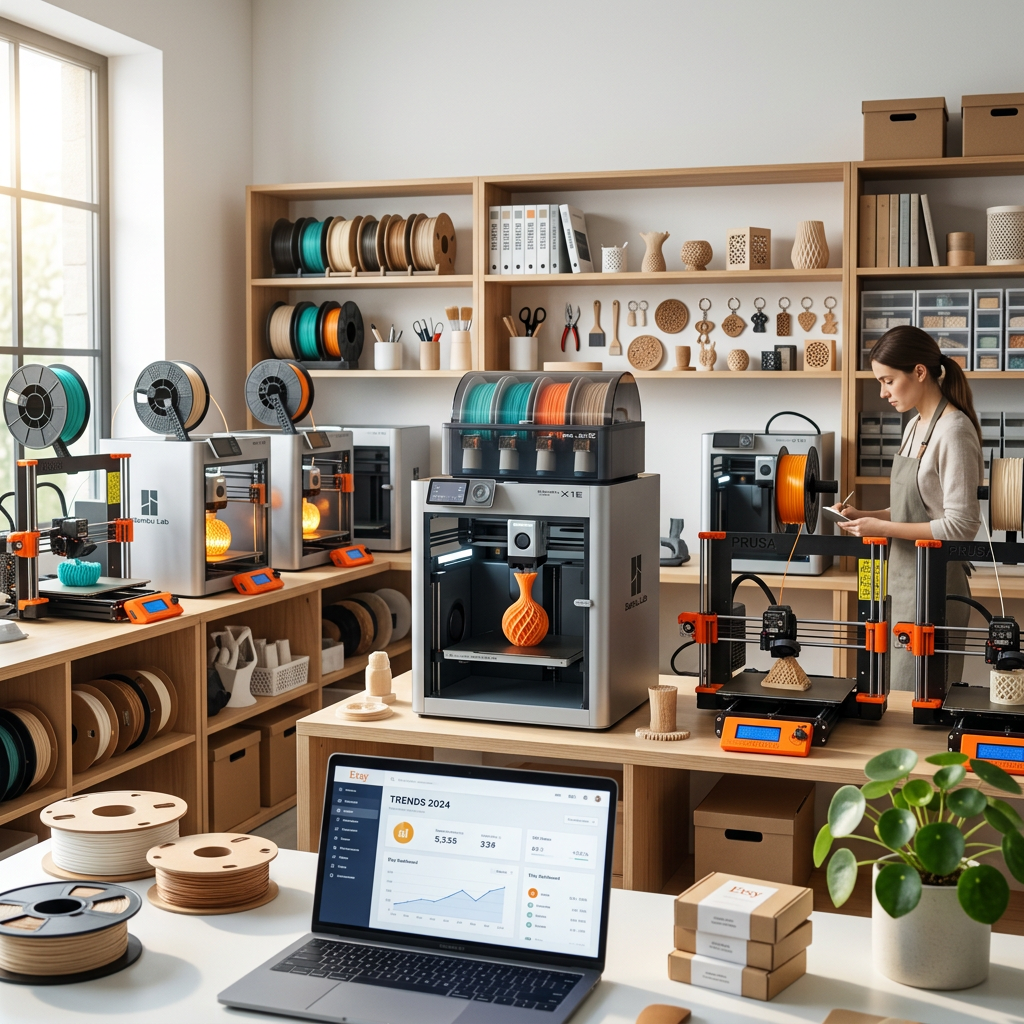
Competitive Positioning and Niche Selection
Selling generic 'articulated dragons' is no longer a viable business model in 2026. These items are subject to extreme price compression from mass-producers. To win, you must pivot toward functional items or high-end collectibles. Professional sellers are now focusing on mechanical organizers, custom tabletop gaming terrain, and specialized photography gear.
Moving Beyond the STL
If you are using a commercially licensed file that 500 other sellers also have access to, your only lever is price. Instead, consider these three paths:
- Proprietary Design: Use CAD software to solve a specific problem (e.g., a wall mount for a specific 2026 smart home device).
- Hybrid Products: Combine 3D printed parts with wood, LEDs, or metal hardware to increase perceived value.
- Personalization: Lean into Etsy’s core strength by offering custom name plates or custom-fit ergonomic grips.
When identifying these opportunities, consult a best digital planners to sell on Etsy guide to see how successful sellers bridge the gap between digital assets and physical utility. If you aren't sure where to start, looking at what to sell on Etsy to make money can highlight broader market trends that translate well to 3D printing, such as personalized home office decor.
Optimizing Your Etsy SEO for Additive Manufacturing
The way buyers search for 3D printed goods has evolved. In the early 2020s, users searched for "3D printed vase." In 2026, they search for the benefit—"modern geometric minimalist planter." You must hide the technical jargon in the attributes and lead with the lifestyle solution in the title.
Title and Tag Strategy
Your title should lead with the primary use case, not the manufacturing method. To save time during the listing process, use a Free Etsy Title Generator to ensure your primary keywords are front-loaded for the Etsy algorithm. Pair this with a Free Etsy Tag Generator to capture long-tail searches like "eco-friendly desk organizer" or "custom sim racing gear."
Understanding the nuance between different metadata fields is critical for visibility. Mastering Etsy attributes vs tags allows you to specify material types (like PLA or TPU) in the attributes while using tags for more emotive, searchable phrases.

Scaling Operations: From One Printer to a Farm
Scaling a 3D printing business on Etsy creates unique logistical challenges. Unlike how to sell vintage clothes on Etsy, where sourcing high-quality inventory is the bottleneck, your bottleneck is machine uptime.
Automation and Workflow
As orders increase, manual intervention becomes your biggest expense. Implement these efficiency upgrades:
- Remote Monitoring: Use software to monitor print progress and detect failures via AI-camera feeds, reducing scrap rates.
- Batch Processing: Group similar colors and materials together to minimize filament changes and nozzle purges.
- Standardized Packaging: Design your products to fit into standard-sized shipping boxes to reduce dimensional weight costs.
Tip: Invest in a few high-quality 'workhorse' machines rather than a dozen cheap, unreliable ones. The downtime and repair labor on budget printers will neutralize any profit gains from increased volume.
Marketing and External Traffic
In 2026, relying solely on Etsy's internal search is a risky strategy. The most successful shops build a brand that lives outside the marketplace. Short-form video platforms like TikTok and Instagram are perfect for showcasing the 'making of' process, which justifies a premium price point to customers.
Explore Etsy external traffic sources to learn how to funnel social media followers into your shop. Seeing a 3D printer in action is inherently satisfying; use this 'ASMR' appeal to build an audience around your brand's aesthetic. This transition from a simple shop to a recognizable brand is the core of how to build a brand on Etsy, ensuring that customers look for your name specifically rather than just the cheapest 3D print.
2026 Forecast: Is It Worth It?
The market for 3D printed items on Etsy remains highly profitable for those who innovate. While the 'easy' money of 2020-2022 is gone, the professionalization of the niche has higher ceilings than ever before. Sellers who focus on high-quality materials (like carbon-fiber-infused filaments or high-detail resins) and provide exceptional customer service will continue to see 30-50% net margins.
Success requires a balance of technical skill and marketing savvy. By leveraging data-driven design and modern SEO tools, you can turn a small fleet of printers into a robust manufacturing business.
Stop guessing your margins and start optimizing your shop’s visibility today with ListerRank’s free SEO tools.
Frequently Asked Questions
What is the best filament for selling on Etsy in 2026?
PLA+ and PETG remain the standards for most functional and decorative items due to their ease of printing and durability. However, niche markets are moving toward 'Carbon Fiber' or 'Wood-fill' filaments which command a 20-40% price premium.
How do I deal with 3D print failures in my pricing?
Professional sellers factor in a 5% to 10% 'failure tax' into their unit costs. This covers the cost of wasted filament and electricity for prints that fail mid-way or do not meet quality control standards.
Can I sell 3D printed items using other people's designs?
Only if they carry a Commercial License. Most free files on sites like Thingiverse or Printables are for personal use only. Always verify the license or, better yet, design your own to protect your brand.
Is resin printing better than FDM for Etsy?
Resin (SLA) is better for high-detail miniatures and jewelry but has higher material costs and extensive post-processing (washing/curing). FDM is better for functional parts and larger home decor items.