

Navigating the administrative requirements of a modern e-commerce business often feels like decoding a complex regulatory puzzle. While both documents are essential for legal operation, a sales tax registration and a business license serve two entirely different masters and functions. As of June 2026, failing to distinguish between the two can lead to significant back-tax liabilities or the forced closure of your marketplace storefronts.
The Fundamental Divide: Revenue vs. Permission
At its core, a sales tax registration (often called a sales tax permit or seller's permit) is an agreement between your business and a state's Department of Revenue. It authorizes you to act as an agent of the state to collect tax from customers. Conversely, a business license is a regulatory permit—usually issued by a city or county—that grants you the legal right to operate a commercial enterprise within that specific jurisdiction.
Why the Distinction Matters in 2026
Many sellers mistakenly believe that obtaining a local business license covers their tax obligations. In reality, a business license does not give you the authority to collect sales tax, nor does a sales tax permit allow you to legally operate a physical warehouse or office in a municipality that requires local licensing. For those managing complex operations, ensuring your inventory is properly tracked across these jurisdictions is vital; see our step-by-step guide to syncing eBay and Amazon inventory to maintain clear records of where your physical presence creates these obligations.

Sales Tax Registration: The Gateway to Tax Collection
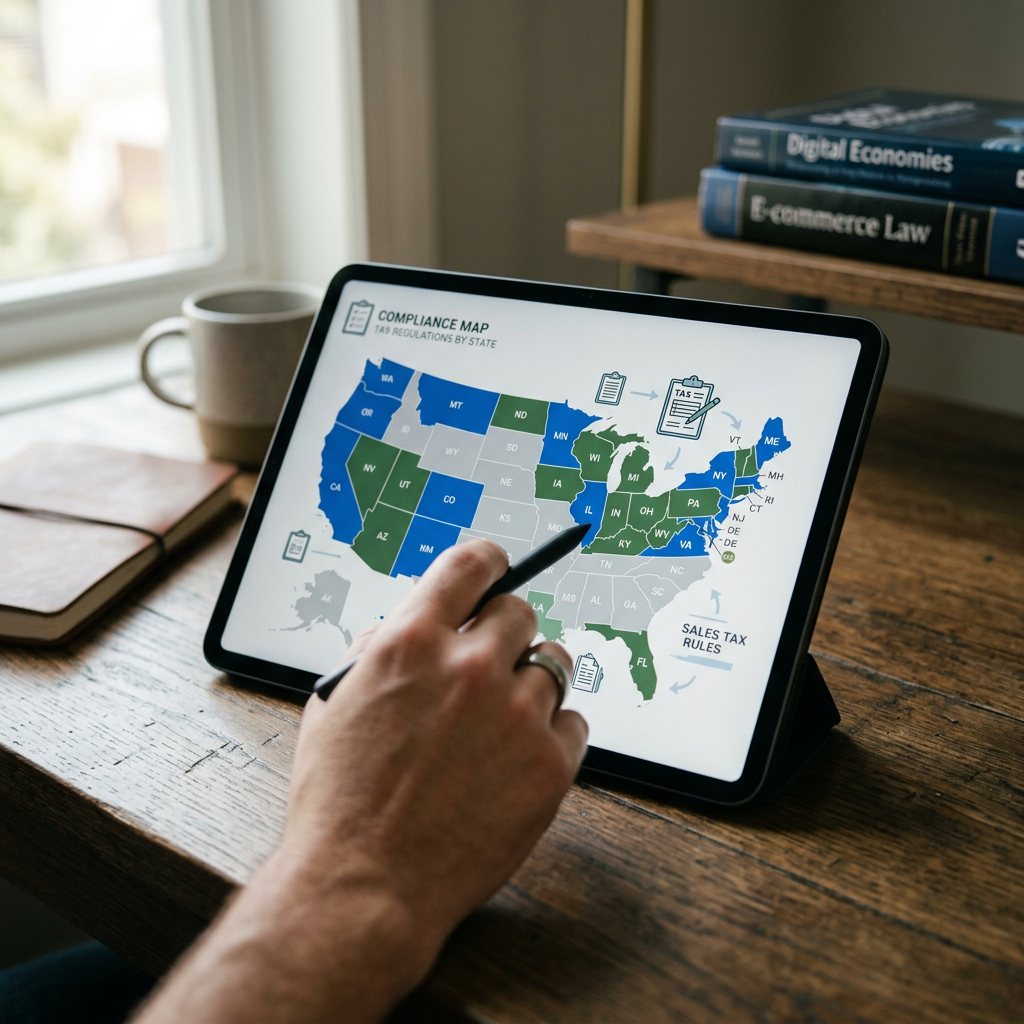
A sales tax registration is mandatory if you have "nexus" in a state. In 2026, nexus is triggered by physical presence (like inventory in a 3PL) or economic activity (surpassing a state's revenue or transaction threshold).
Key Functions of the Sales Tax Permit
- Tax Collection: Allows you to legally charge sales tax at the point of sale on platforms like Shopify or Amazon.
- Resale Certificates: A valid registration usually doubles as a resale certificate, allowing you to purchase inventory tax-free from wholesalers.
- State Reporting: It creates a dedicated account for filing monthly, quarterly, or annual sales tax returns.
For marketplace sellers, the complexity often arises from the FBA Inventory nexus and how software affects liability. If Amazon moves your goods to a warehouse in Pennsylvania, you likely have physical nexus there, requiring a sales tax registration even if you don't have a Pennsylvania business license.
The General Business License: Local Compliance
While sales tax is managed at the state level, business licenses are almost exclusively local. Whether you are running a home-based business or a large-scale distribution center, the city or county wants to ensure your business meets zoning, safety, and health codes.
Common Types of Business Licenses
- General Operating License: Required by most cities to conduct any business.
- Home Occupation Permit: Specifically for e-commerce sellers working from a residential address.
- Zoning Permits: Validates that your warehouse or office is in a legally approved area.
Tip: Before signing a lease for a new fulfillment center in 2026, verify local zoning laws. A sales tax permit won't save you if the city determines your warehouse is in a prohibited residential zone.
Comparative Breakdown: Sales Tax vs. Business License
| Feature | Sales Tax Registration (Permit) | General Business License |
|---|---|---|
| Issuing Authority | State Department of Revenue | City or County Clerk |
| Primary Purpose | To collect and remit sales tax | To legally operate a business |
| Cost | Usually free (some states $10-$50) | Varies widely ($25 - $500+) |
| Renewal | Many are lifetime; some expire | Typically annual or biennial |
| Nexus Metric | Physical or Economic | Physical location only |
Intersection with Marketplace Platforms
Marketplaces like Amazon, Walmart, and TikTok Shop have streamlined tax collection through Marketplace Facilitator Laws. However, this does not exempt you from registration requirements. If you exceed economic nexus thresholds—typically $100,000 in sales or 200 transactions in most states as of 2026—you must still register for a sales tax permit in that state to report your exempt marketplace sales.
When optimizing your listings for these platforms, it is crucial to factor in compliance costs and tax-inclusive pricing. Utilize our free Amazon FBA Calculator to estimate your net profit after fees and taxes. Proper financial planning is especially important when scaling TikTok Shop multi-channel integration, where high volume can trigger nexus in dozens of states simultaneously.
Resale Certificates and Dropshipping
One of the most significant benefits of a sales tax registration is the ability to issue resale certificates. This is a critical component of sales tax for dropshipping in 2026, where you must provide proof of registration to your suppliers to avoid paying tax on the products you intend to resell. Without the sales tax permit, you are the "end consumer" in the eyes of the law, which will significantly erode your margins.
The Impact on Accounting
Managing these separate documents requires robust record-keeping. As your business grows across multiple channels, you will need multi-channel e-commerce accounting software to track which sales occurred in states where you hold a permit versus those where the marketplace facilitated the collection. This prevents double-taxation and ensures your year-end audits are seamless.
Step-by-Step Compliance Checklist for 2026
- Identify Physical Nexus: Determine where you have inventory, employees, or an office. Apply for a business license in those specific cities.
- Identify Economic Nexus: Monitor your trailing 12-month sales. Once you hit a state's threshold, apply for a sales tax registration within 30 days.
- Register with the SOS: If you are an LLC or Corporation, ensure you are registered with the Secretary of State before applying for local licenses.
- Update Marketplace Settings: Enter your sales tax ID into your seller central accounts to ensure the platform handles exemptions correctly.
- Calculate Your Margins: Use tools like the free Amazon ACoS Calculator to see how your overhead—including permit and license fees—impacts your overall advertising strategy and profitability.
Conclusion
Understanding the nuance of sales tax registration vs business license requirements is not just about avoiding fines; it is about building a scalable foundation. A business license keeps your local doors open, while a sales tax permit allows you to legally trade and source inventory nationwide. By maintaining both, you protect your business from the regulatory shifts expected throughout 2026 and 2027.
Ensure your business stays ahead of the curve by using the ListerRank suite of free tools to optimize your growth.
Frequently Asked Questions
Do I need a business license if I only sell on Amazon?
Yes, most jurisdictions require a business license for any commercial activity, even if it is strictly online and conducted from home.
Can I use my sales tax permit as a business license?
No, they are separate documents issued by different government levels. A sales tax permit is for tax collection, while a business license is for legal operation rights.
What happens if I sell in a state where I have nexus but no sales tax registration?
You could be held liable for all uncollected sales tax, plus significant penalties and interest, regardless of whether you collected the tax from the customer.
Does a sales tax permit expire?
It depends on the state. Some states have permanent permits, while others require renewal every 1-5 years. Always check with the state's Department of Revenue.